VALLEY OF FLOWERS AND HEMKUND SAHIB : A FIRST TIMER’S GUIDE
As someone who completed their first-ever Himalayan trek, I’ve compiled a first-timer’s guide to the Valley of Flowers and Hemkund Sahib.
In this blog post, I’ll upload the itinerary I followed, details of each trek, travel tips, my experience and more.
I recently returned from my first-ever Himalayan trek to the Valley of Flowers and Hemkund Sahib in Uttarakhand. It was a memorable experience that will stay with me for years.
You can plan the Valley of Flowers and Hemkund Sahib trek yourself, or travel with a trekking company. I’d vote for the latter, so you don’t have to worry about the logistics.
I travelled with GAF in collaboration with the Rock Lizard. They took care of the hotels, transport, food, sightseeing, permits, entry fees, and other stuff. So, all I had to worry about was enjoying myself for 6 days.
NOTE:- THIS IS NOT A SPONSORED POST. IT’S BASED ON MY PERSONAL OPINION AND EXPERIENCE.
THE 6-DAY VALLEY OF FLOWERS AND HEMKUND SAHIB ITINERARY
Most trekking companies organise the Valley of Flowers and Hemkund Sahib trek from Rishikesh to Rishikesh. So, based on that, here’s your itinerary for the next 6 days.
- DAY 1: Drive from Rishikesh to Joshimath or Pipal Koti.
- DAY 2: Drive from Joshimath or Pipal Koti to Govind Ghat. From there, take the jeeps to Pulna. From there, it’s a 9 km trek to Ghangharia; your home for the next 3 days.
- DAY 3: Today, you’ll be trekking from Ghangharia to the Valley of Flowers and back. This trek is an 8 km round trip.
- DAY 4: Today you’ll trek from Ghangharia to Hemkund Sahib Gurudwara, Laxman Temple, and Hemkund Sarovar and back. It is a 14 km round trip.
- DAY 5: It’s time to say goodbye to Ghangharia. Today, you’ll be trekking from Ghangharia to Pulna. From there, jeeps will drop you off at Govind Ghat. From there, head to your accommodations in Joshimath or Pipal Koti.
- DAY 6: Drive from Joshimath or Pipal Koti to Rishikesh.
NOTE: Every trekking company labels the Valley of Flowers and Hemkund Sahib trek as “easy”. It is easy for regular trekkers, but not for first-time trekkers or those returning to trekking after a gap. It’s an uphill climb, so be prepared.
During your 6-day trip, you’ll be trekking for 4 days, 9 to 10 km daily.
HOW TO GET THERE?
If you’re travelling with a trekking company, you won’t have to worry about anything except showing up. But if you’re planning to do it yourself, here’s all the transportation you’ll have to arrange.
ARRIVING IN RISHIKESH
The nearest airport or train station to Rishikesh is in Dehradun, which is well-connected to other cities.
From Dehradun to Rishikesh, it is a 1½ drive, and depending on traffic, it might take longer. You can easily find shared taxis, cabs, and buses commuting between Dehradun and Rishikesh.
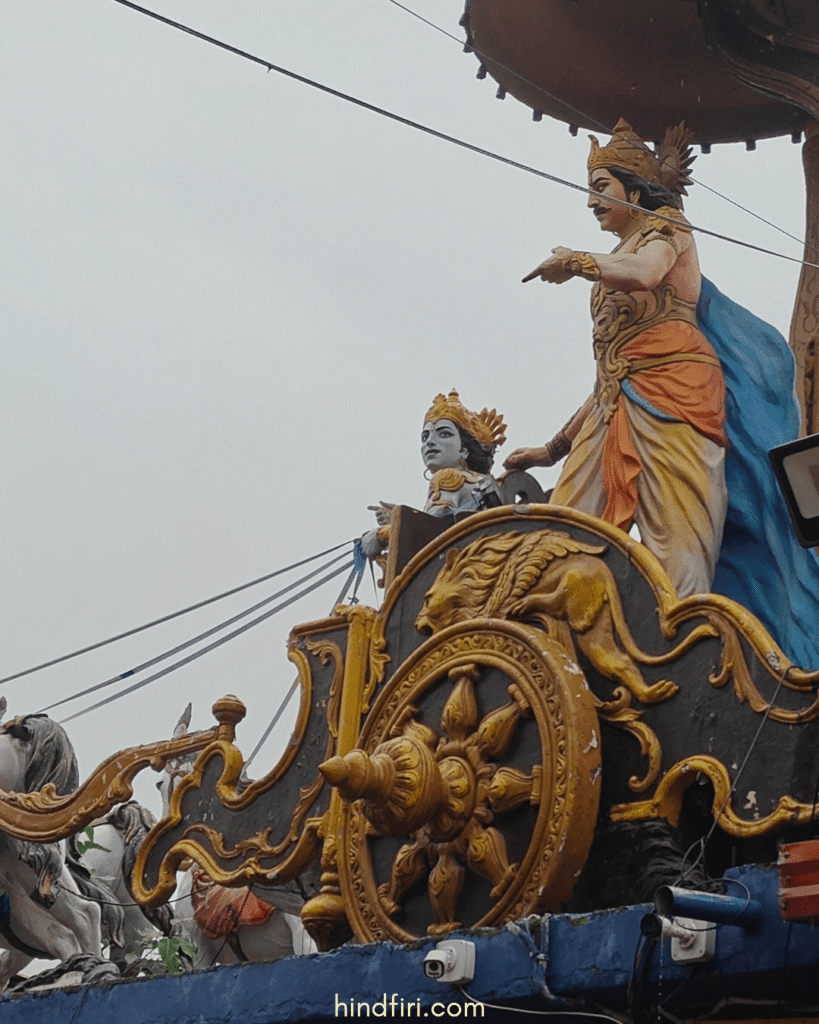
TRAVEL TIP: I recommend arriving in Rishikesh a day before the tour starts and booking flights or trains for the day after returning to Rishikesh. That way, you have buffer days in case of delays.
RISHIKESH TO JOSHIMATH OR PIPAL KOTI
From Rishikesh, buses, shared taxis, and private cabs are available to Joshimath or Pipal Koti. Private cabs are Rs. 3500 onwards, and shared taxis are Rs. 650 onwards.
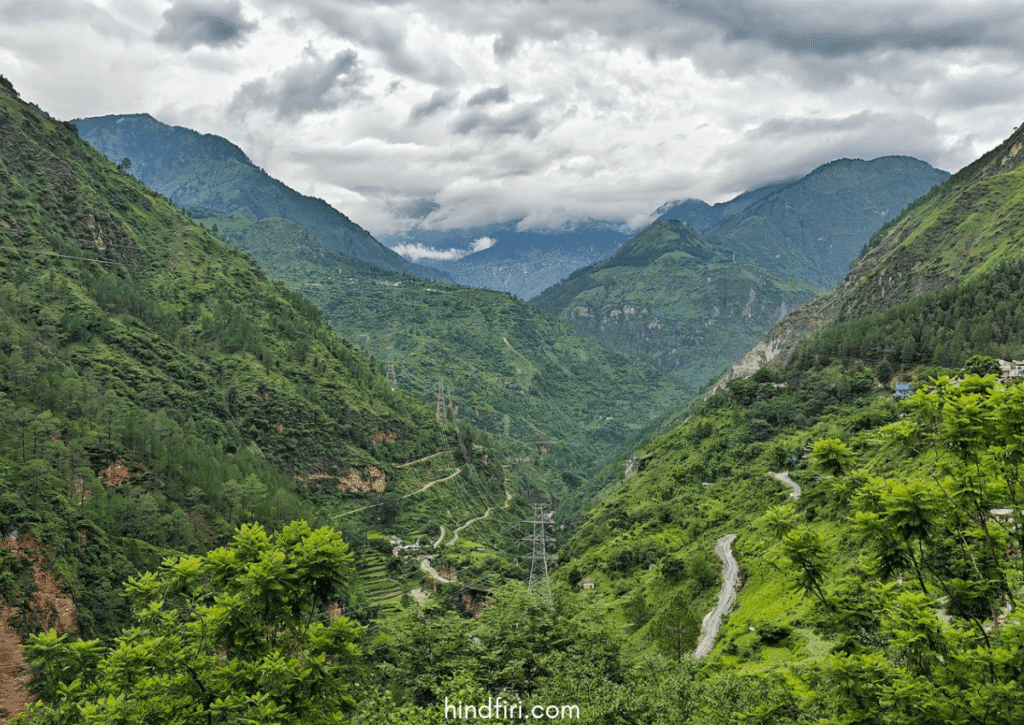
TRAVEL TIP: If you’re making the arrangements yourself, I recommend staying in Joshimath as it’s closer to Govind Ghat. And you’ll be able to start your trek early.
JOSHIMATH TO GOVIND GHAT
All vehicles, cabs, and shared taxis drive up to Govind Ghat. From there, you’ll have to transfer to jeeps that will drive you 4 km up a winding road to Pulna. It costs around Rs 100 per person.
You can skip the jeep and walk, but that’s an additional 4 km on top of the already long 9 km trek.
From Pulna you can either walk the 9 km to Ghangharia, hire a horse, or a pitthu (you’ll sit in a basket carried by a person).
9 KM TREK FROM PULNA TO GHANGHARIA
From Pulna, visitors can trek or get a horse or a pitthu to Ghangharia, 9 km away.
The entire trail to Ghangharia is paved, but the climb is steep and inclined, with lots of switchbacks.
It takes 6-7 hours to trek the 9 kms, less if you’re on horseback. Therefore, I’d suggest beginning early to avoid trekking in the dark. Also, horses and pitthus are fewer towards the evening.
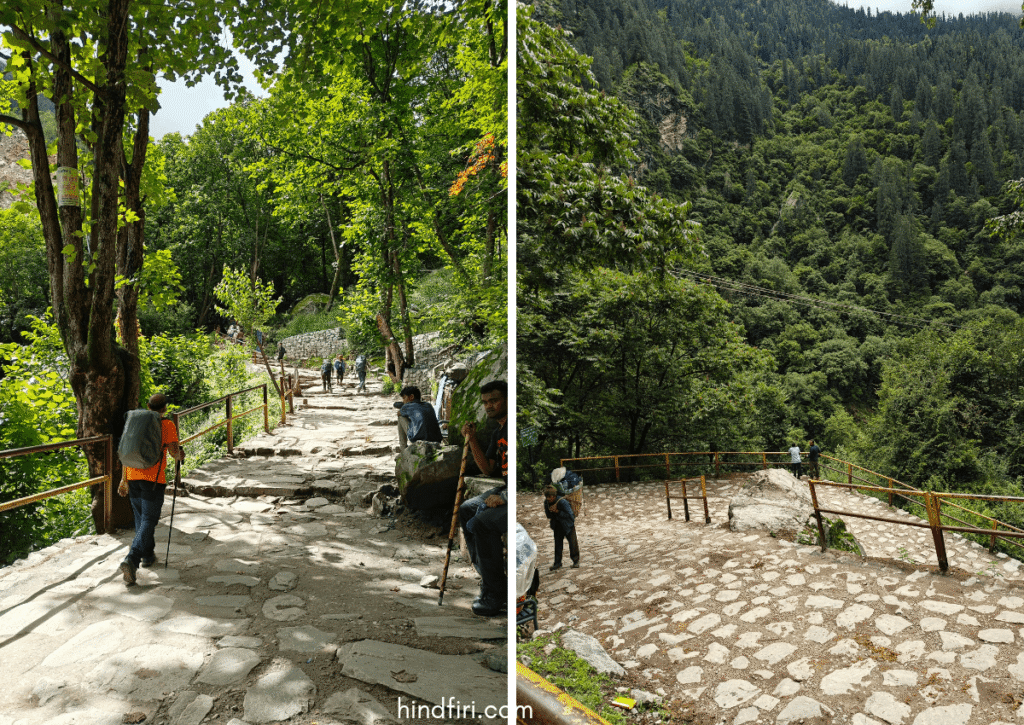
TRAVEL TIP: Avoid taking the shortcuts. They might save you a few minutes, but they’ll tire you out quickly. Also, you don’t want to slip and hurt yourself before the main treks even begin.
The trail from Pulna to Ghangharia has several shops selling tea, coffee, water, food, and snacks. However, as you go higher, the prices for everything increase. A Rs. 20 water bottle will cost you Rs. 60 or more.
You’ll also find washrooms along the trail.
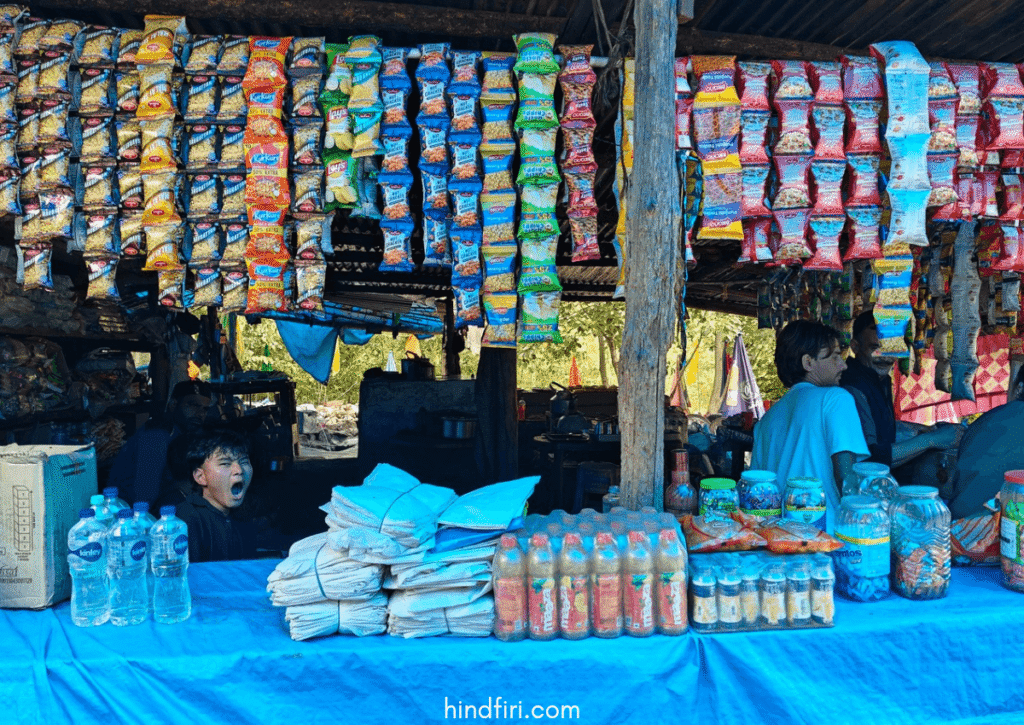
If you’re trekking the 9 km, you can offload your heavy bags to a porter and only carry a day pack with essentials. Porters charge Rs 750 per bag, and the bag must weigh less than 10 kg. If it’s more, they’ll charge more.
I began my trek from Pulna at 10 a.m. and reached my accommodations at 5 p.m. 9 kms is a long distance, but the trek from Pulna to Ghangharia is beautiful, and every corner leads to a scenic view. It is best enjoyed on foot, and not on horseback or a pitthu.
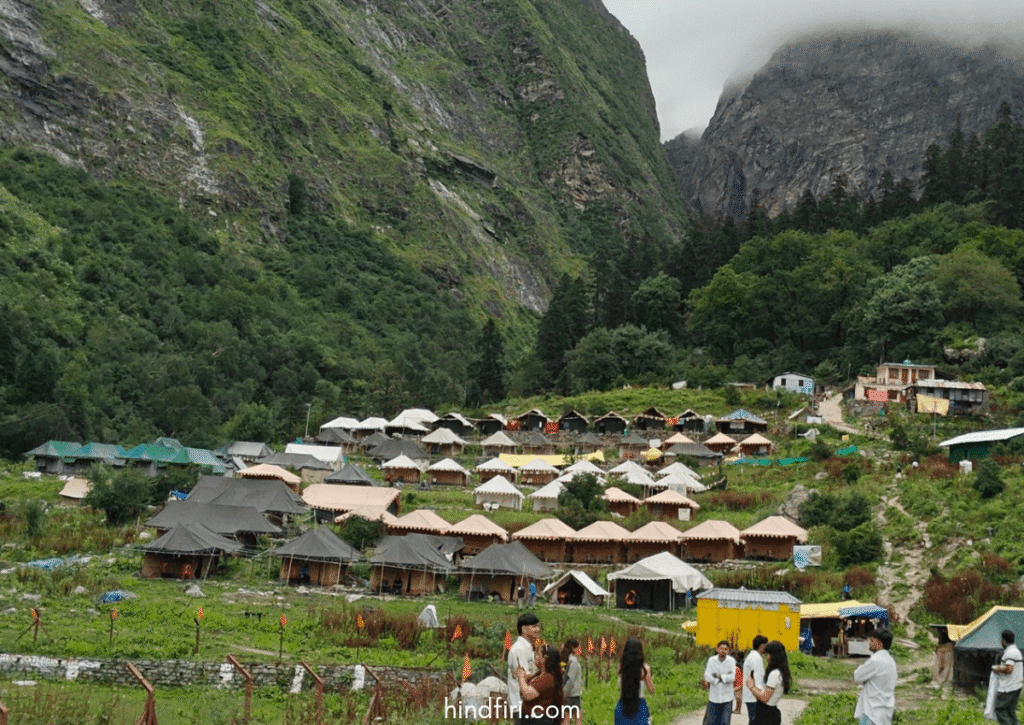
Whenever I felt I couldn’t walk further, I’d stop to admire the view, and within seconds I forgot how much further I had to walk. Each time, the stunning scenery was worth the effort.
GHANGHARIA TO THE VALLEY OF FLOWERS
There’s slight confusion regarding the total distance of the Valley of Flowers trek. Some say it’s 4 km one way; others say it’s more. They are both true.
From Ghangharia, the starting point of the Valley of Flowers trail is 200-300 m away. After crossing Ghangharia, you’ll walk up a paved path that diverges. Turn left for Valley of Flowers. Walk for a few minutes to reach the famous Valley of Flowers gate. From here, your main 4 km trek begins.
The views are stunning, but it’s an uphill climb with a few downhill sections. There are more places to explore once you arrive at the valley.
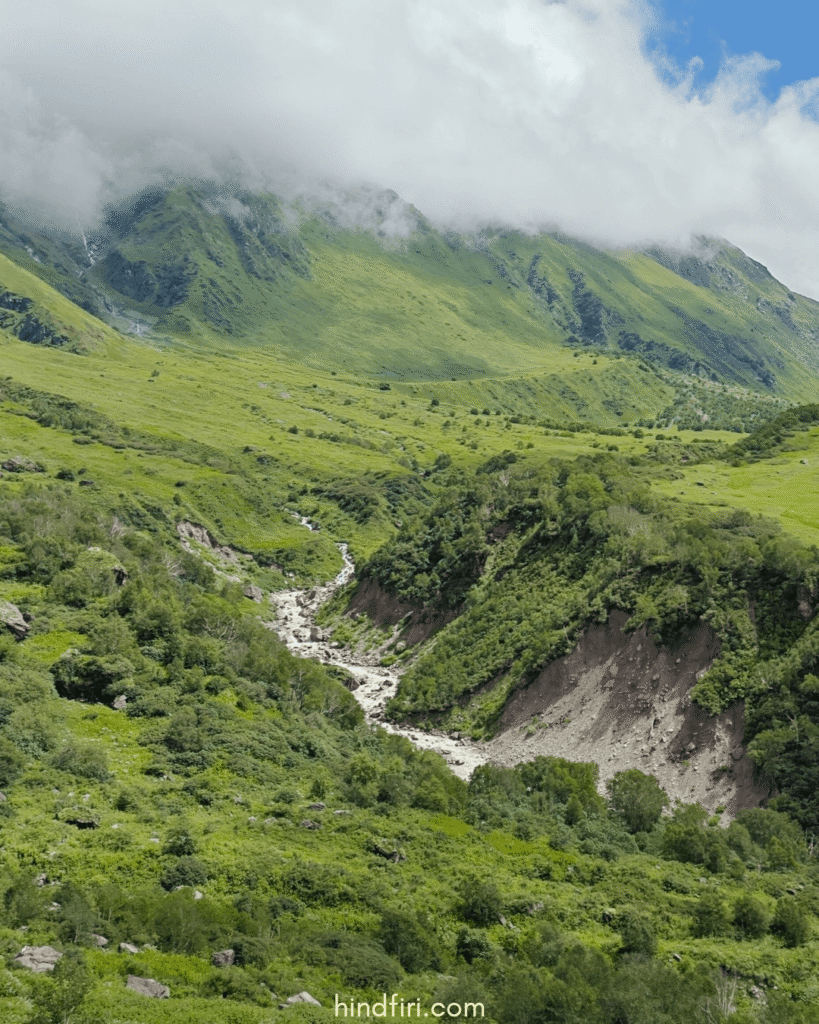
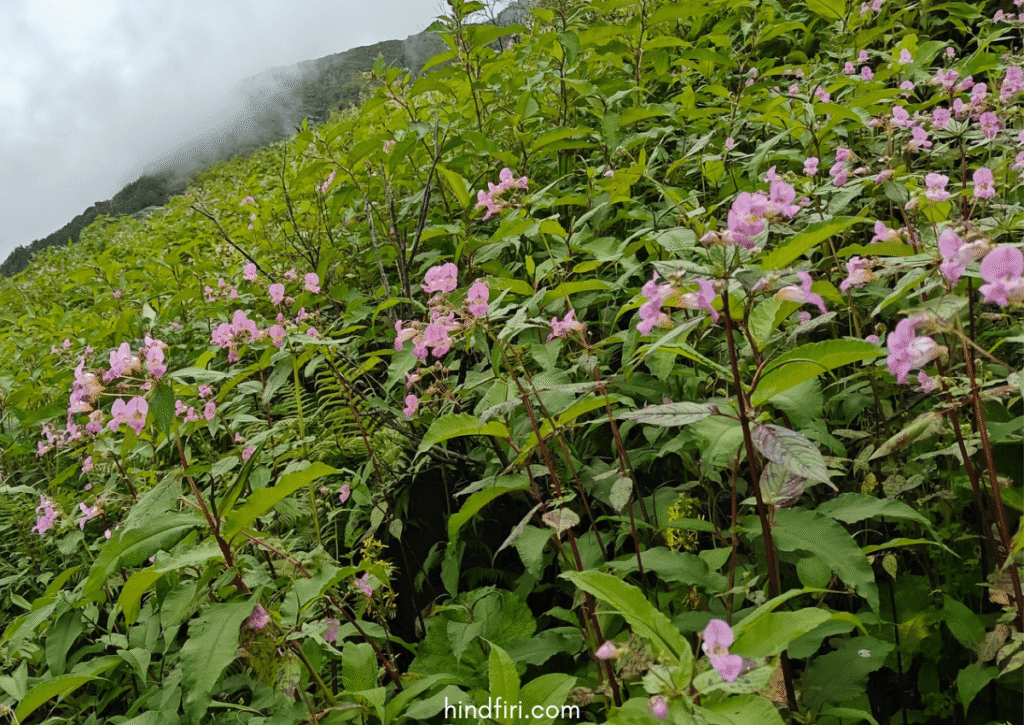
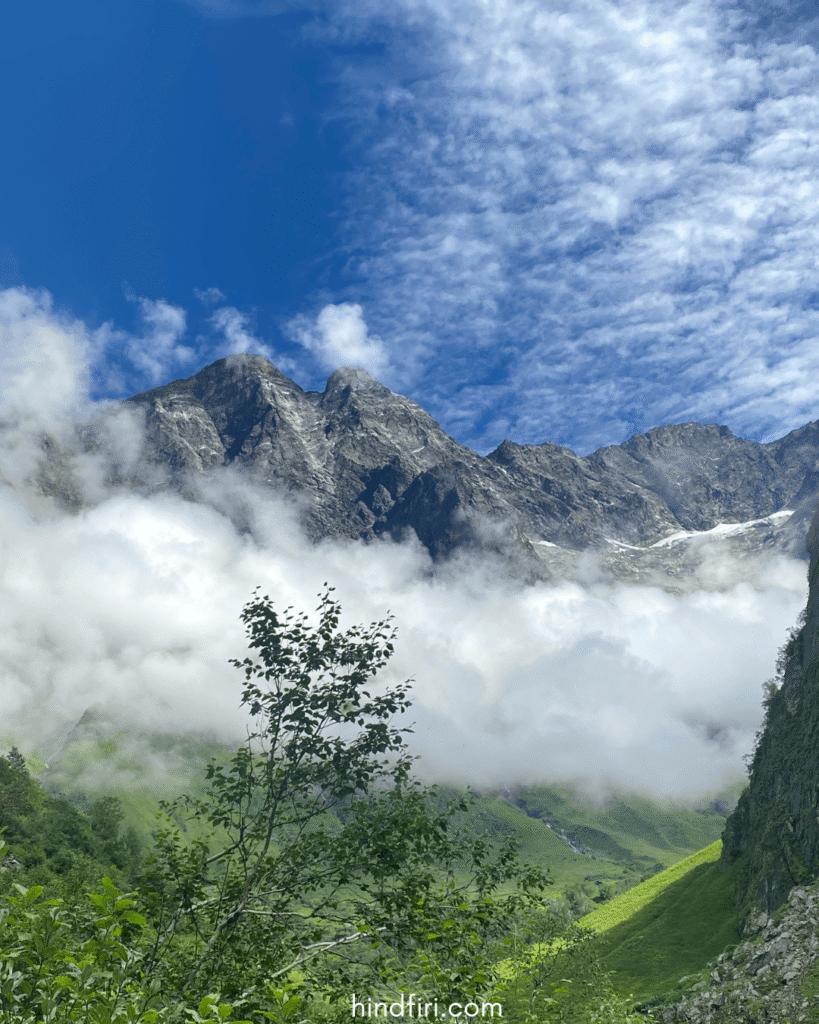
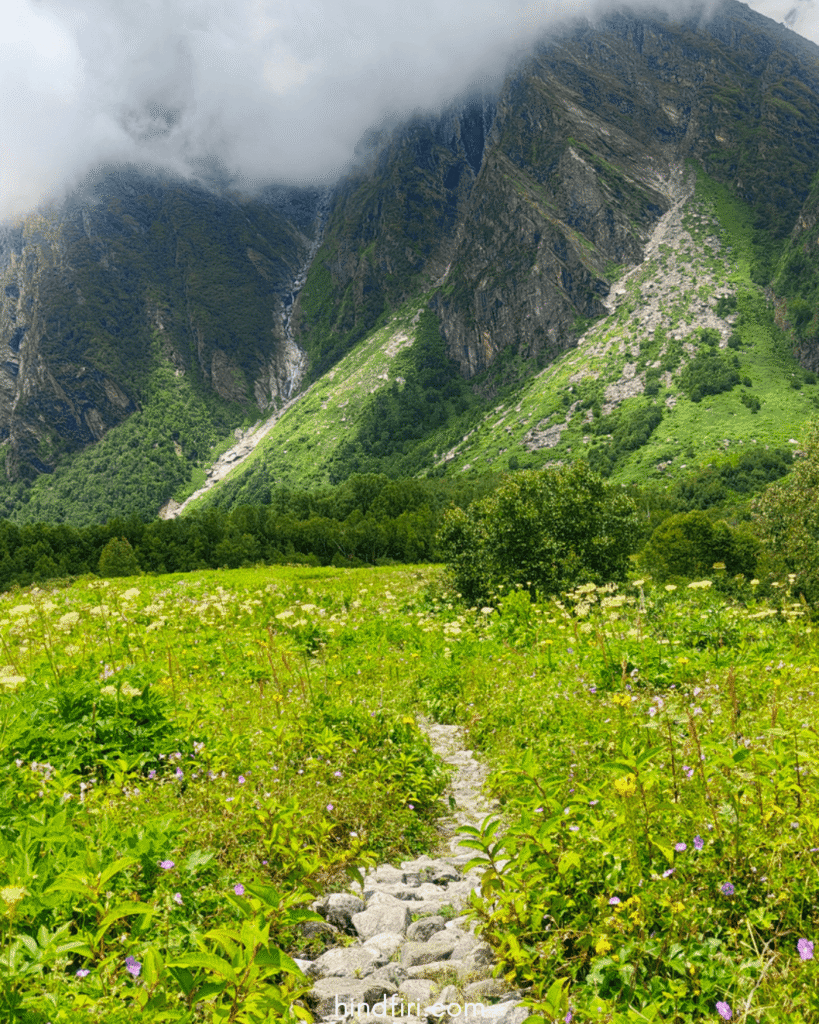
People often assume that once you arrive at the valley, the riverbed is nearby. It’s not. From the valley, it’s 1½ km to the grave of Joan Margaret Legge and another ½ km to the riverbed. So, that is 4 km to the valley and an additional 2 km to the riverbed (one way).
If you’re determined to visit the river, arrive early because by 1:30-2 p.m. all groups start descending. Everyone has to exit the valley before 5 p.m.
TRAVEL TIP: The earlier you begin, the more time you have to explore the Valley.
Trust me, you’ll want to stop again and again. It’s just that beautiful, but as someone who’s been there, I suggest stopping for photos on the descent as there’ll be fewer people.
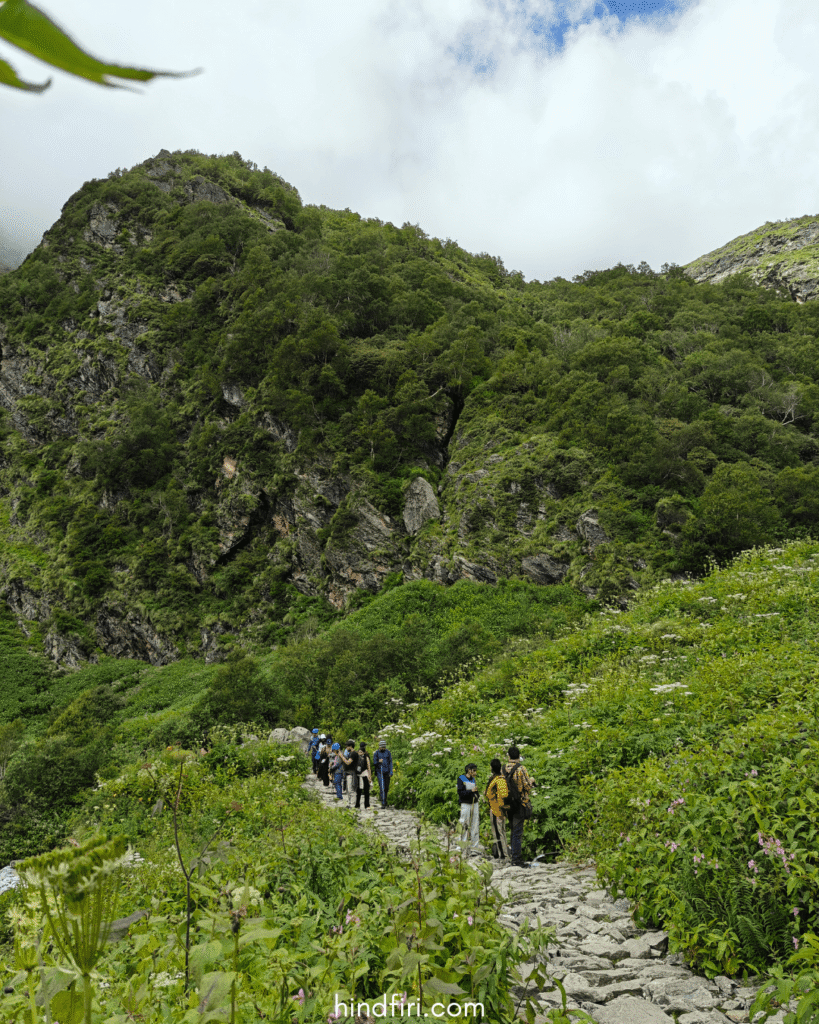
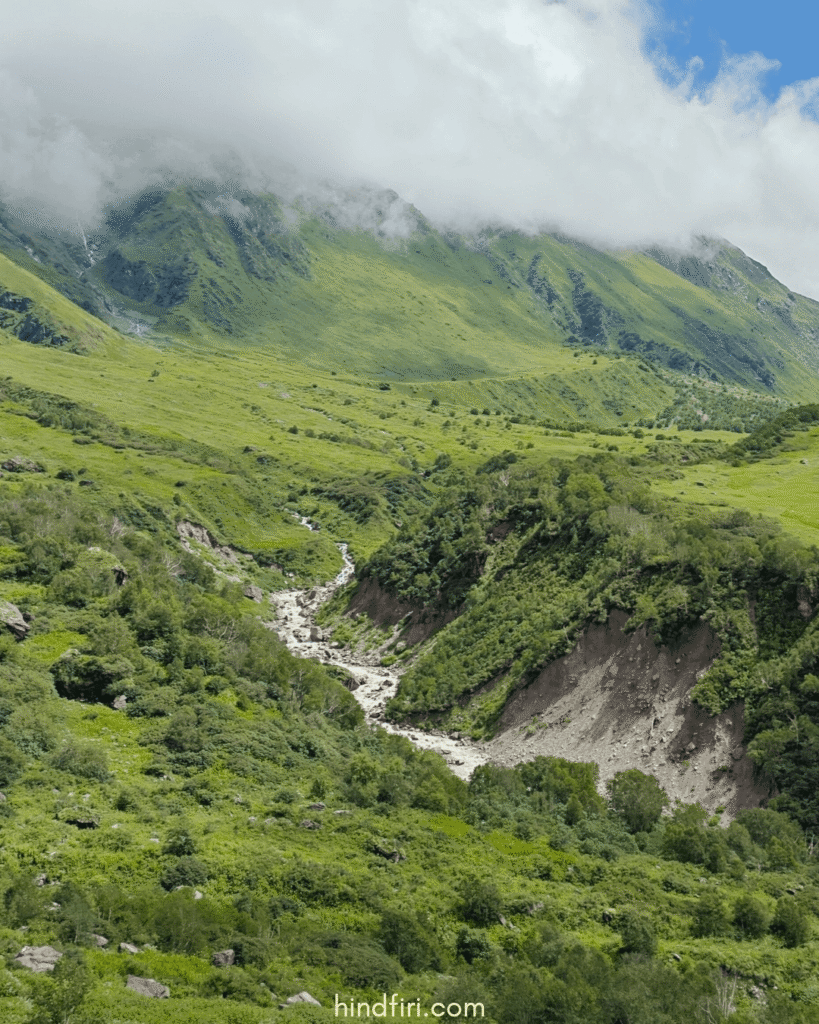
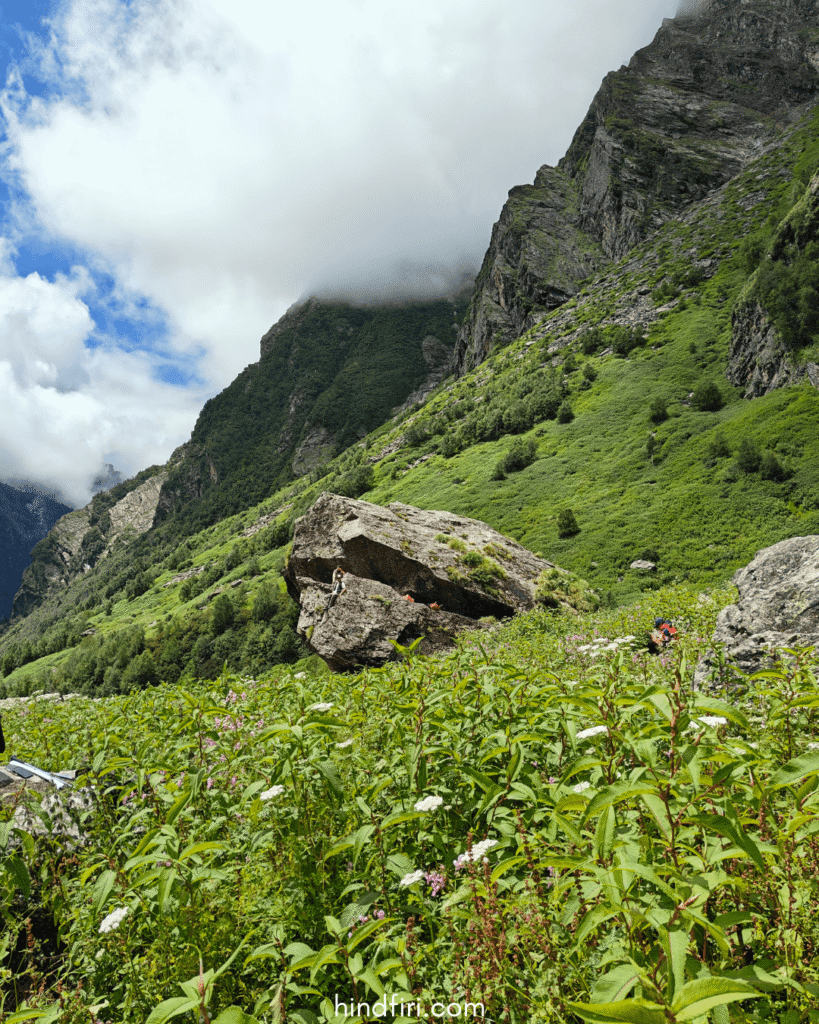
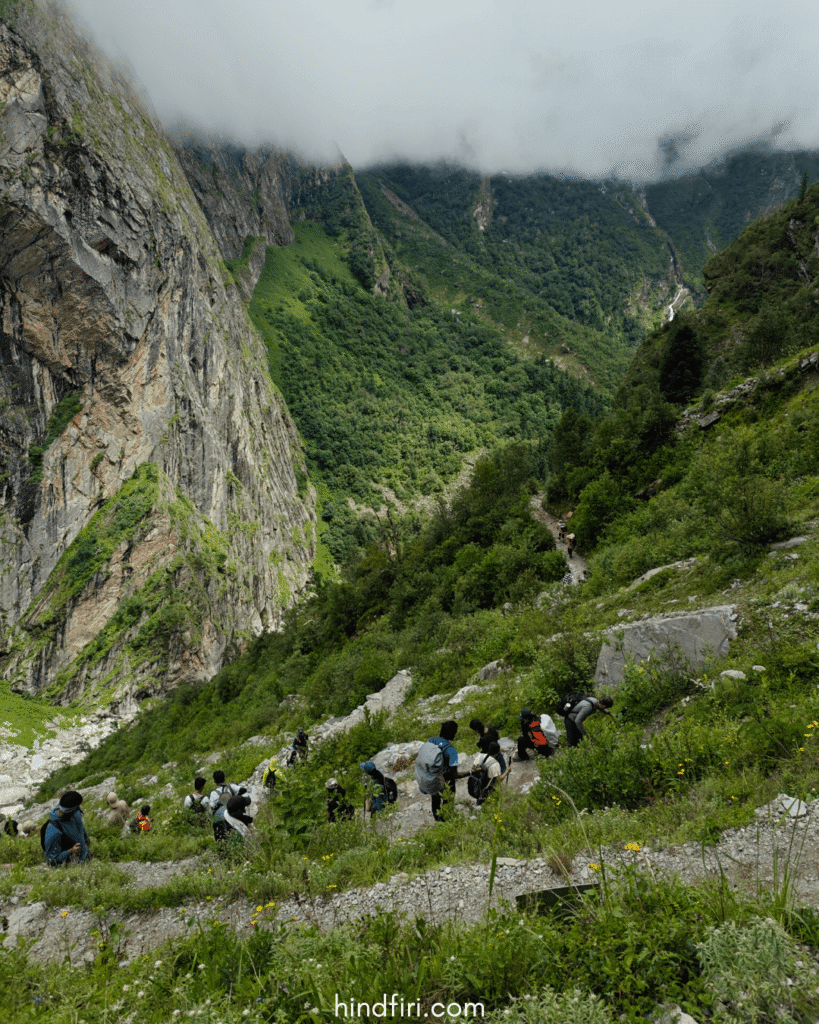
TRAVEL TIP: Only 300 permits are issued daily. So, if you’re arranging it yourself, you’d better be there before the crowds.
GHANGHARIA TO HEMKUND SAHIB GURUDWARA
Compared to the previous two days, the trek to Hemkund Sahib is 7 km of pure steep incline, with a 1500 m elevation gain.
This might sound intimidating, and it is. Stay consistent, take slow steps, don’t take the shortcuts, and you’ll be just fine.
Cross Ghangharia as you did the previous day until the path diverges. Instead of turning left, continue straight for Hemkund Sahib Gurudwara.
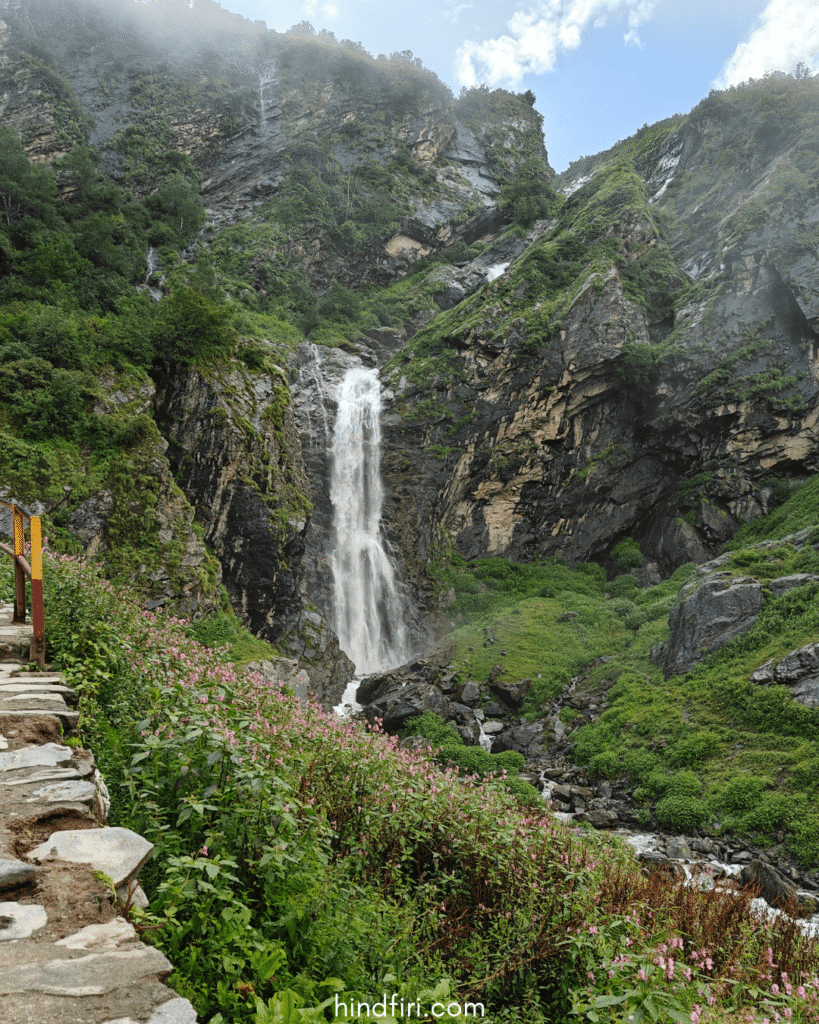
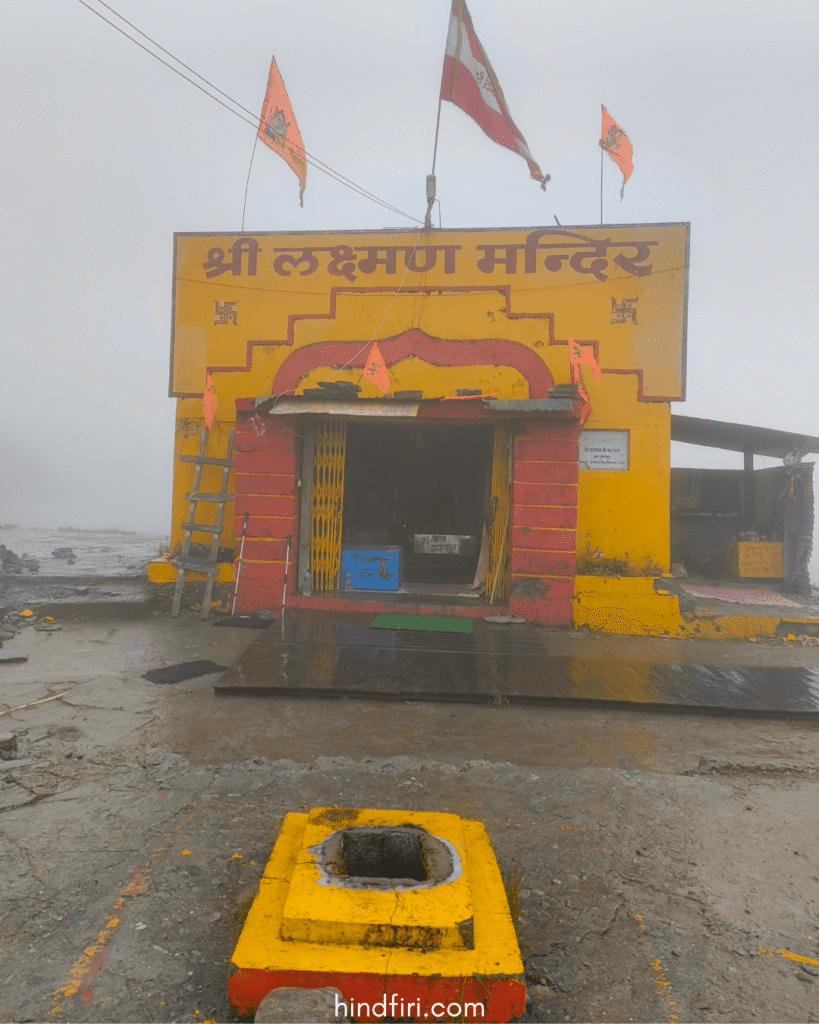
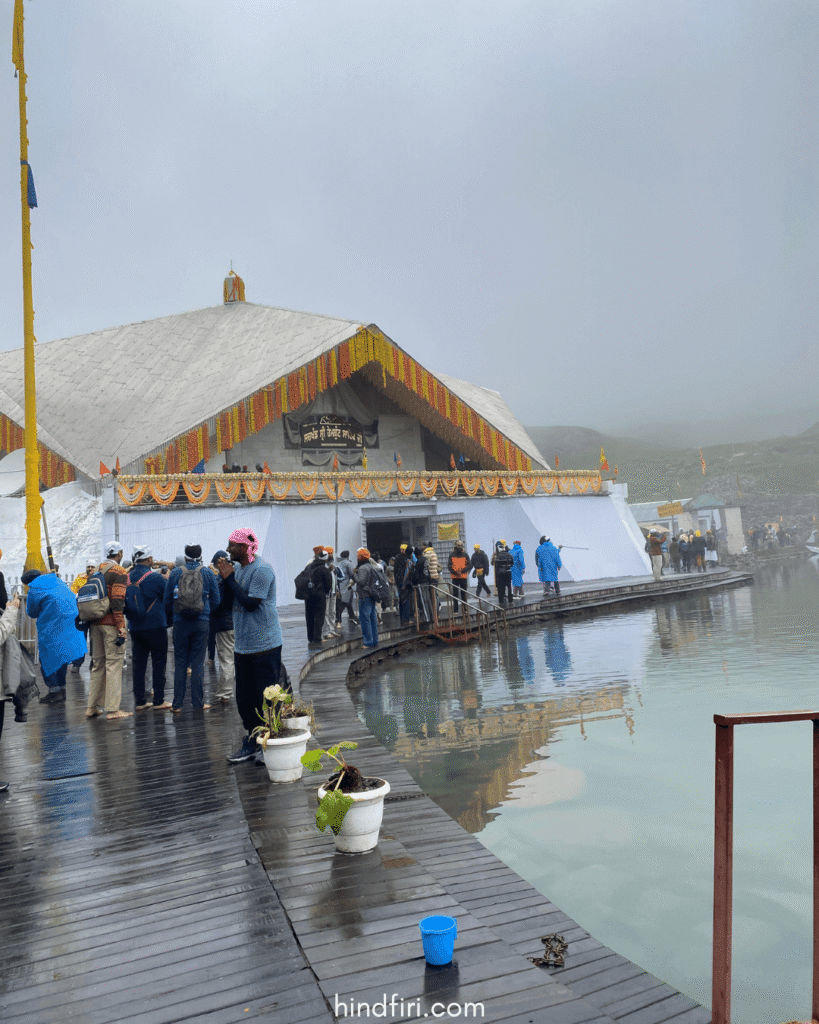
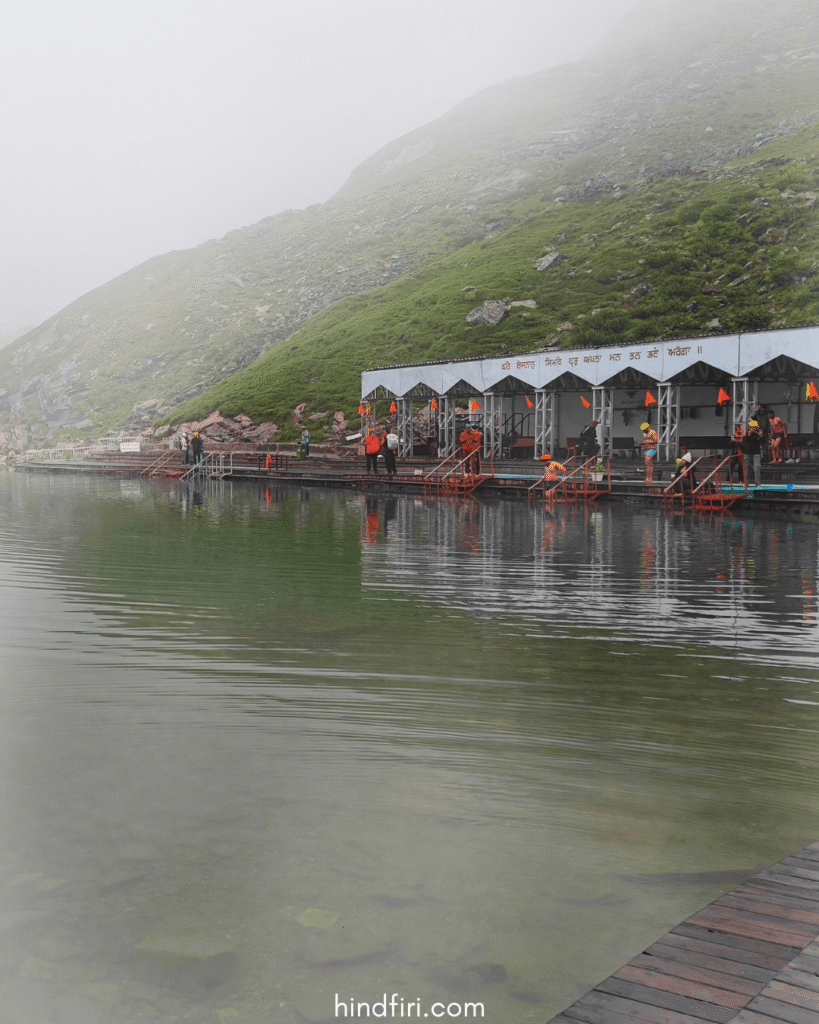
It takes 5-6 hours to reach the gurudwara, less if you’re on horseback or a pitthu.
I began my trek around 7 a.m. and reached Hemkund Sahib at 12:30 p.m. That last 1 km was brutal, but I made it to the top.
TRAVEL TIP: The Hemkund Sahib Gurudwara closes at 2 p.m. and the Langar at 3 p.m.
Also, if you later decide to descend on horseback or pitthu, leave before 1:30 p.m. because by 2 p.m. the horses and pitthus have left.
My group began descending a little after 2 p.m., which, according to our group leaders, was late. They were right because we reached our campsite at 7 p.m. So, unless you’re willing to risk walking downhill in the dark, leave around 1:30 p.m.
Is this an easy trek? No, it’s moderate, but the views and the destination are worth every second of discomfort. I didn’t think I would make it to the top, but I did. And as soon as I saw the gurudwara, all my tiredness just vanished.
BEST TIME FOR THE VALLEY OF FLOWERS AND HEMKUND SAHIB TREK
Mid-August is the best time to visit the Valley of Flowers because the flowers are in full bloom. The only downside is that it’s also the busiest time.
The Valley of Flowers and Hemkund Sahib are open only for a few months from late May or June to the end of October. After October, everyone, including locals, departs from Ghangharia and returns at the end of May or early June.
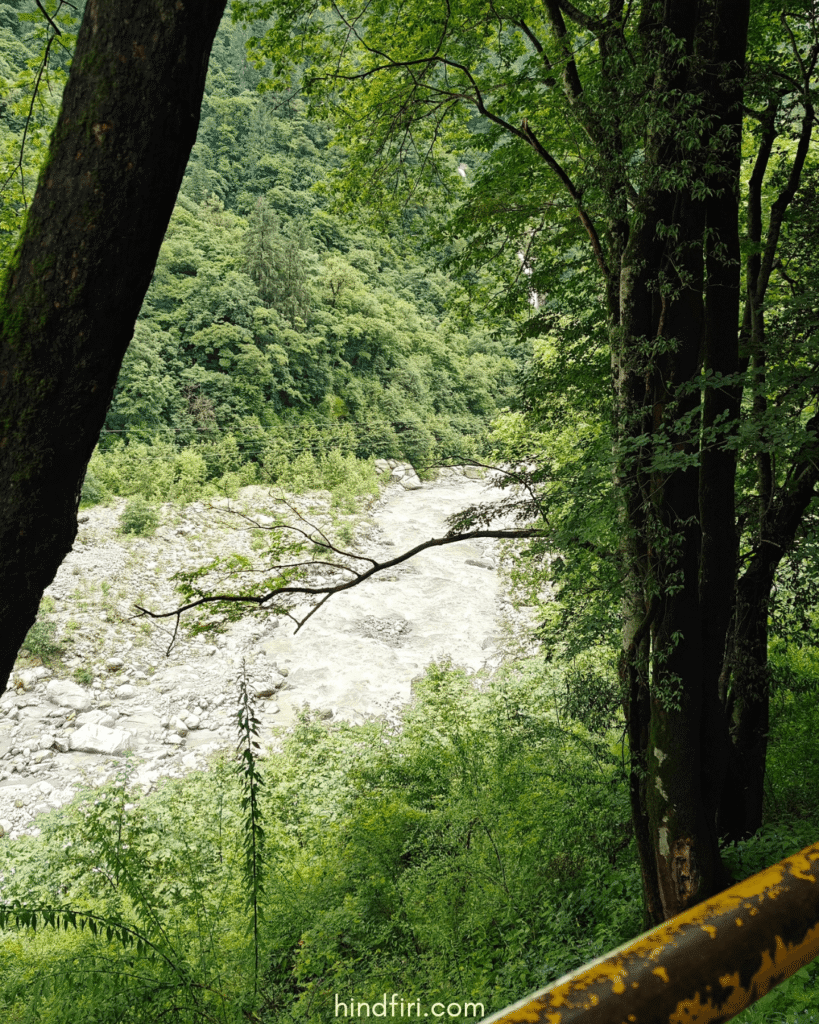
I visited the Valley of Flowers and Hemkund Sahib from 1-7 August. There was a significant crowd, but around 15 August the crowd doubled. The flowers had bloomed during my visit, but after 15th August the number of flowers had doubled.
Fortunately, we were blessed with good weather throughout the trip. But that might not always be the case.
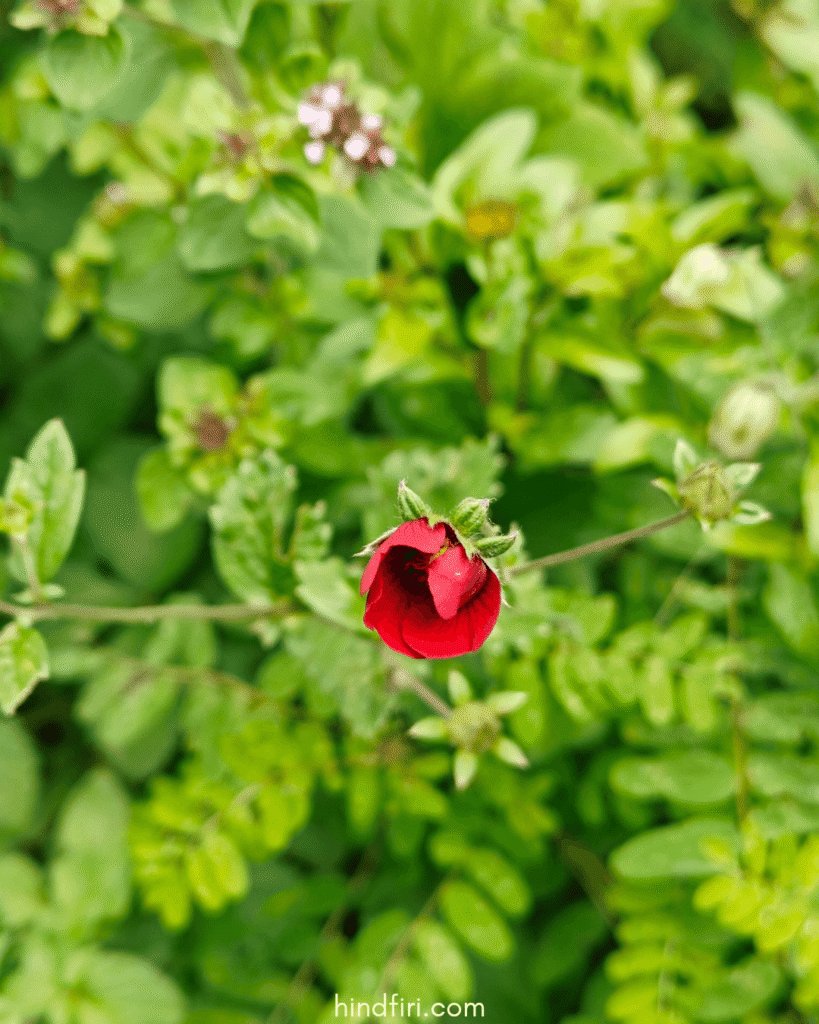
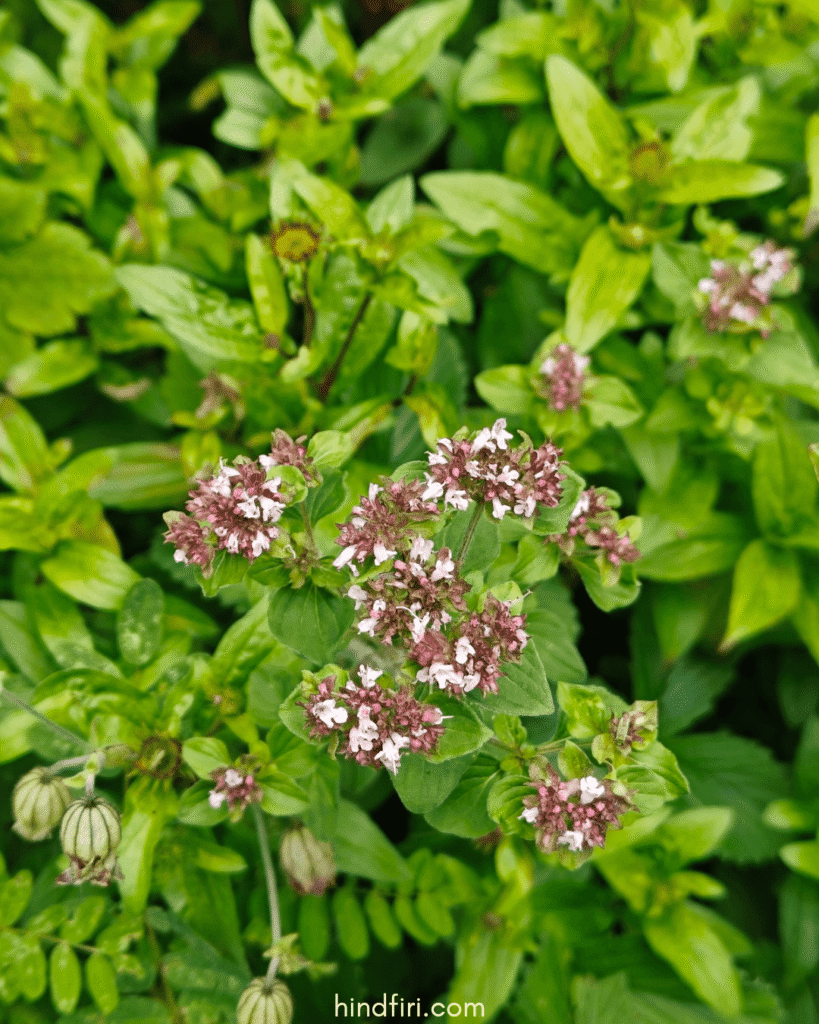
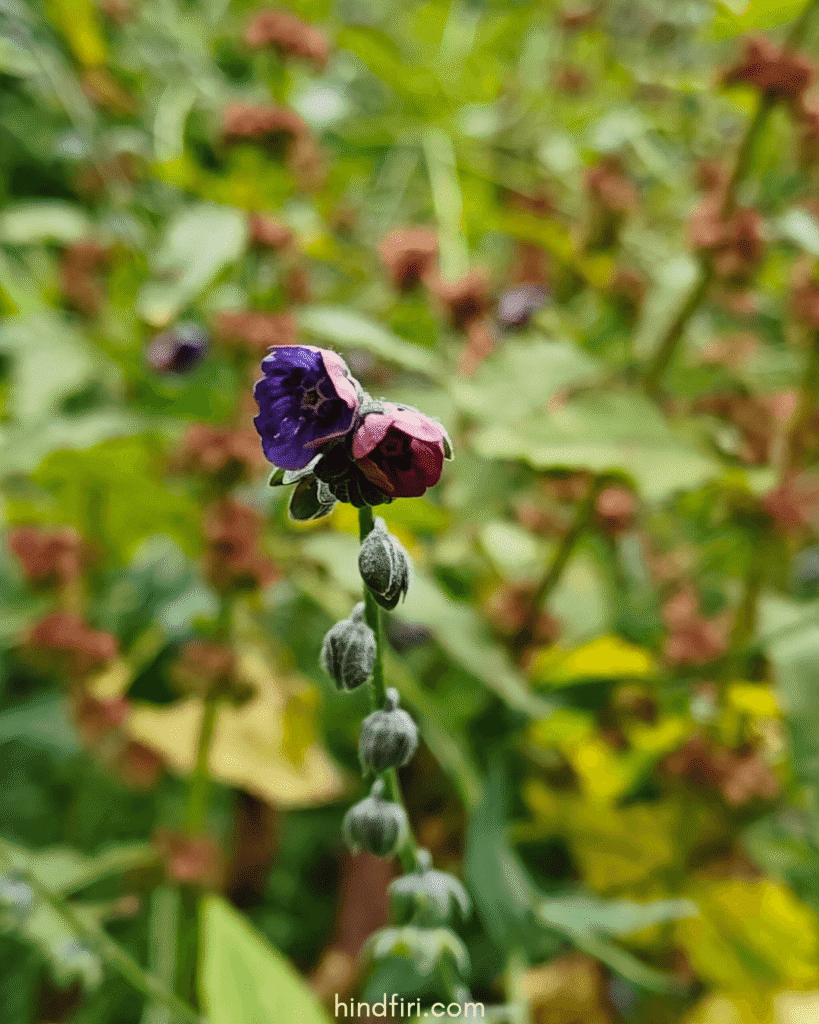
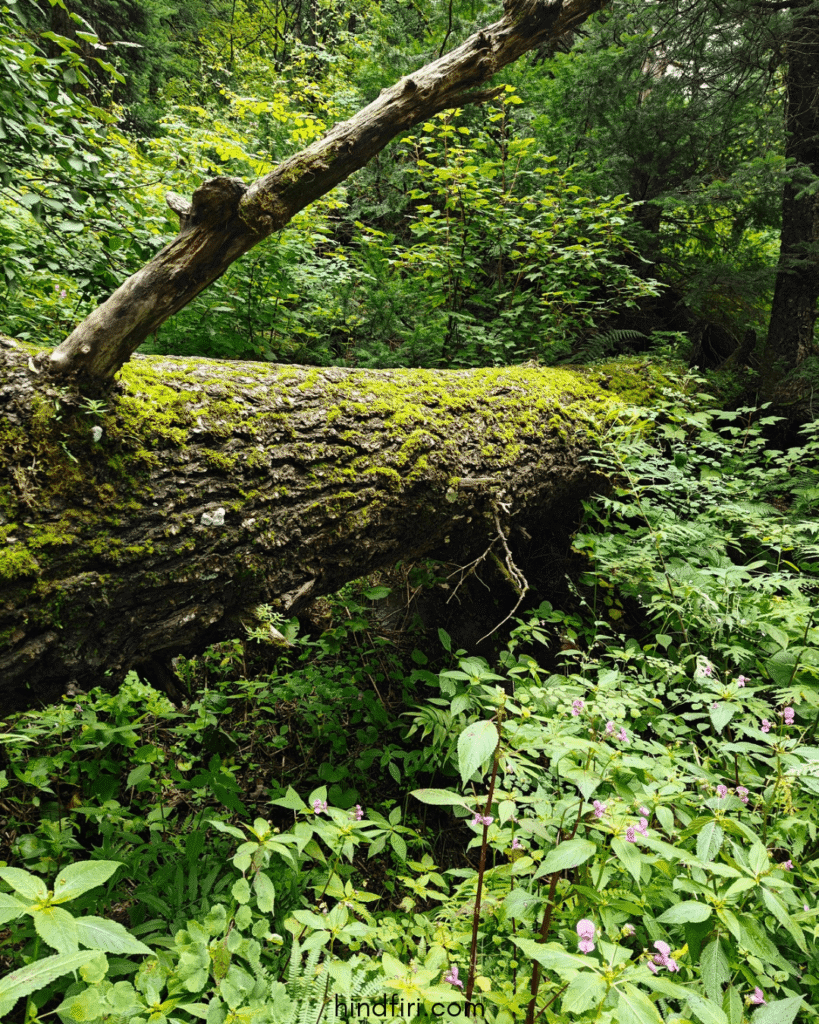
The day I was trekking to Hemkund Sahib, the people visiting the Valley of Flowers didn’t have clear weather. It rained, and the area was covered in a thick layer of fog for most of the day.
The weather is unpredictable in the mountains. It can be sunny one minute, cold the next, or suddenly start raining. So, be prepared and always carry a jacket, poncho, or cap.
If you don’t want to get stuck with a large crowd, visit early August or early September. And October sees the least crowds. But by then the flowers have begun wilting. The valley is just as beautiful in September as in August; only the flowers turn various shades of yellow and orange.
TRAVEL TIP: Whether you’re travelling in June or October, pre-book your accommodations because there are limited stays in Ghangharia.
WHAT TO PACK FOR THE VALLEY OF FLOWERS AND HEMKUND SAHIB TREK?
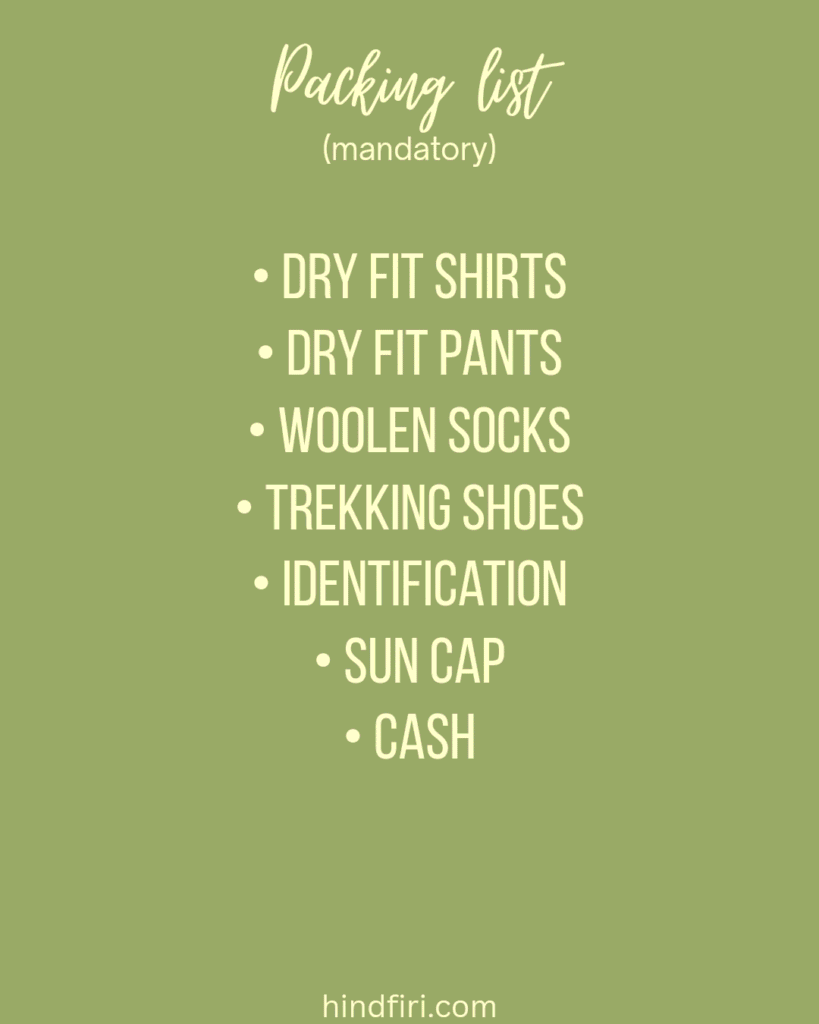
GAF sent us a complete packing list for our 6-day trip. It helped me pack all the essentials, and I didn’t feel like I needed anything more.
TRAVEL TIP: Pack light if carrying the bags to and from Ghangharia yourself. Even if you offload them to a porter, each bag shouldn’t weigh more than 10 kgs, or you’ll pay extra.
So, here’s everything you’ll need for the trek.
- Walking poles (optional)
- Night suit
- Undergarments
- Reusable water bottles (1 litre each)
- Sunglasses (optional)
- Woollen cap
- Sun cap
- Woollen socks
- Trekking shoes (mandatory)
- Dry fit t-shirts
- Trekking pants
- Sunscreen (mandatory)
- Waterproof gloves
- Poncho or umbrella (mandatory)
- Down Jacket
- Fleece jacket
- Identification and documents (mandatory)
- Cash
- Powerbank
- Phone charger
- Torch
- Snacks and protein bars
- First aid kit and medicine
- Day pack
- Toiletries
- Thermals
The quantity of t-shirts and pants is up to you. Try to pack light, and if you forget anything, no worries. Everything is available in Ghangharia.



THINGS TO KNOW BEFORE UNDERTAKING THE VALLEY OF FLOWERS AND HEMKUND SAHIB TREK
- This is a beginner-friendly trek only for those who are used to some form of trekking.
- This is not a place you can spontaneously decide to visit. While you don’t need a ticket for Hemkund Sahib, Valley of Flowers has an entry fee. And only 300 people are permitted daily.
- This trek is open only for a few months from Late May or June to the end of October.
- There are no food stalls or shops in the Valley of Flowers, so carry a packed lunch and lots of water.
- Ghangharia is the base for the Valley of Flowers and Hemkund Sahib trek. It is a small village with limited stays. Don’t be an idiot and come without hotel bookings.
- Carry lots of cash, because UPI and online payments don’t work. Only Jio has network in Ghangharia.
- This is a trek, and the area is somewhat remote, so don’t expect 5-star facilities. All the hotels and campsites have basic amenities.
- Lastly, the Valley of Flowers might not be something everyone enjoys. I heard a few people saying how it was a waste of time. They are allowed to have their opinions, but if you’re going only for reels, then you might be disappointed. The entire 6-day trip is about enjoying nature’s beauty. If that’s not for you, I’d recommend choosing a different destination.
TRAVEL TIPS FOR VALLEY OF FLOWERS AND HEMKUND SAHIB
- Always drink water. As our team leader used to say, whether your legs are aching or you have a headache, drink lots of water. It also helps reduce the chances of altitude sickness. So, in the mountains, water is the solution for nearly everything.
- Increase your endurance before this trek. It might be labelled a beginner-friendly trek, but it’s not. So, practice before coming here.
- Weather is unpredictable and can change at the drop of a hat. So, always be prepared for wind, sun or rain.
- Just like water, sunscreen is a must. Boys, you might not take this seriously, but the sun in the mountains is harsh and you’ll be sunburnt and won’t know until later.
- Try not to wear strong perfumes when visiting the Valley of Flowers because there are lots of bees there.
- Horses are not available for the Valley of Flowers trek as the trail is narrow. Only pitthus and dolis are available.
CONCLUSION
That brings us to the end of the first-timer’s guide to the Valley of Flowers and Hemkund Sahib.
In this blog post, I’ve shared travel tips, the itinerary, the route, packing list, and more. I hope this was helpful.
If you have any queries or suggestions, let me know in the comments.
I hope this ignites your wanderlust because
Life sucks a lot less when you add mountain air, a campfire and some peace and quiet.
brooke hampton