6 MUST-VISIT PLACES IN AYODHYA
In today’s blog post, I’ve listed 6 must-visit places in Ayodhya.
Last week, I returned from a 7-day road trip to Ayodhya, Prayagraj and Varanasi. I wanted to write down all the minuscule but essential travel tips before I forgot, so here we are.
Ayodhya has been on my bucket list for a while, but since the Ram Mandir opened to the public, my motivation doubled.
Last year, I had planned a trip to Ayodhya, but a few relatives had returned from there and said that the temple was still under construction. So, I postponed it for a few months.
However, it took me almost a year to get here. And as the saying goes, good things come to those who wait. It was true this time. I had the easiest and quickest darshan without long waiting periods.
Ayodhya is Lord Ram’s birthplace. It has historical and religious significance. I’m sure there are many underrated and lesser-known small temples and sites to visit. These sites are the 6 must-visit places in Ayodhya.
- Ram Mandir
- Hanuman Garhi Mandir
- Dasharath Mahal
- Kanak Bhavan
- Ram ki Paidi
- Saryu Ghat and River
I’ve listed the places in order to visit, as it’ll save you time and reduce unnecessary walking around in circles.
TRAVEL TIP: Hire an electric autorickshaw for the day. That’s because parking lots are far, and the roads to most places are too narrow for cars. Electric rickshaws will navigate the narrow streets and drop you off at the closest possible area.
SHRI RAM JANMABHUMI MANDIR
The first and most important site and the reason for visiting Ayodhya is the Ram Mandir. Or as it is officially known, the Shri Ram Janmabhumi Mandir.
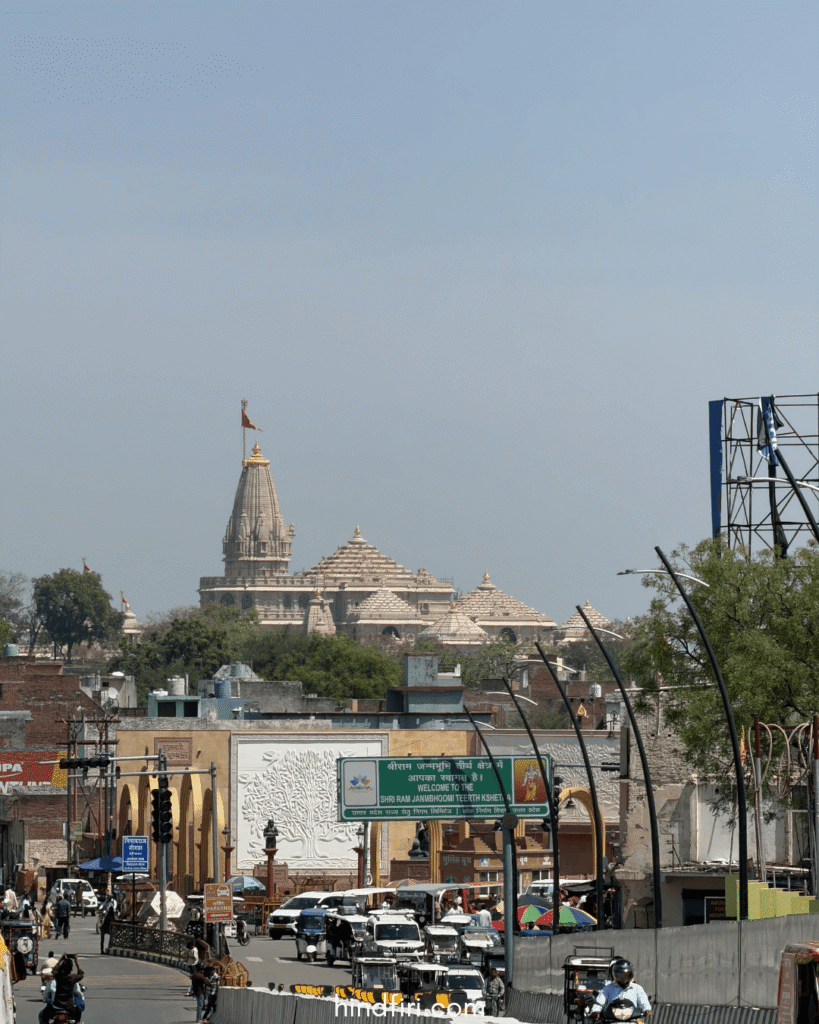
When we arrived at our hotel in Ayodhya in the evening, our hotel manager advised us that the darshan queues are long and it takes longer as the day progresses. He told us to leave at 6 a.m. so we could arrive at the temple early. When we arrived, the temple complex was crawling with people. So, I’m glad the manager urged us to leave early for the darshan.
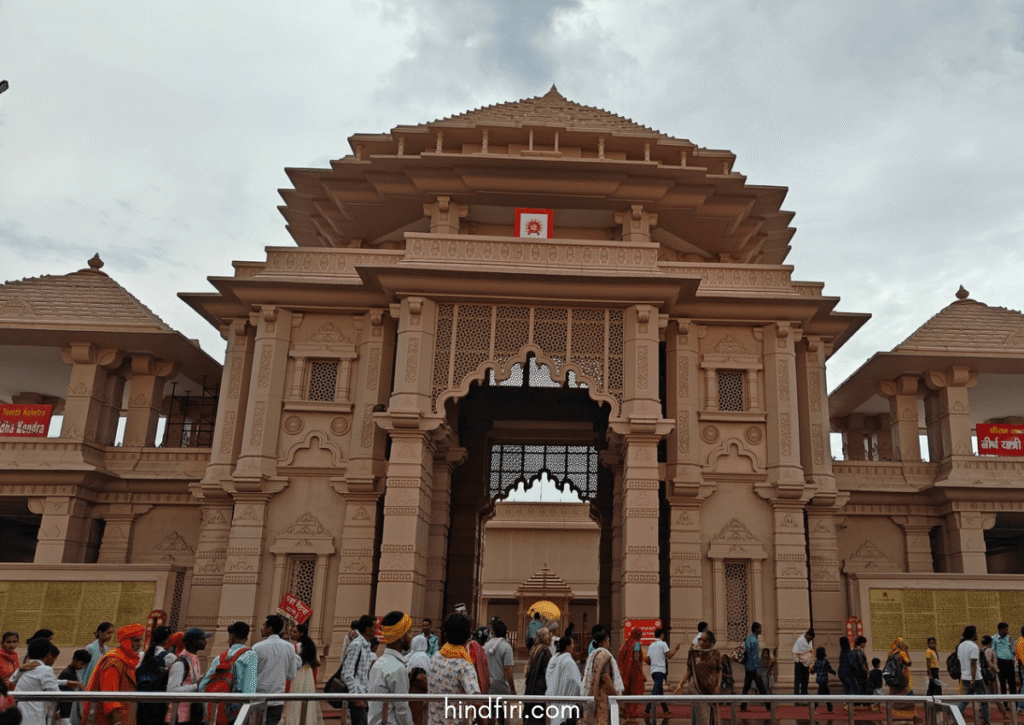
Another advantage of an early start was that the autorickshaw driver dropped us off at a short distance from the security checkpoint.
Ram Mandir is a beautiful architectural marvel. I wish they allowed cameras inside. I would have loved to take photos. Unfortunately, due to recent threats, all electronic and personal items are deposited in the lockers.
Due to the early start, the darshan took less than 50 minutes, and I was able to clearly see the idol as soon as I passed the last step of the temple. Also, I was able to pray before the idol for a few moments without anyone rushing me.
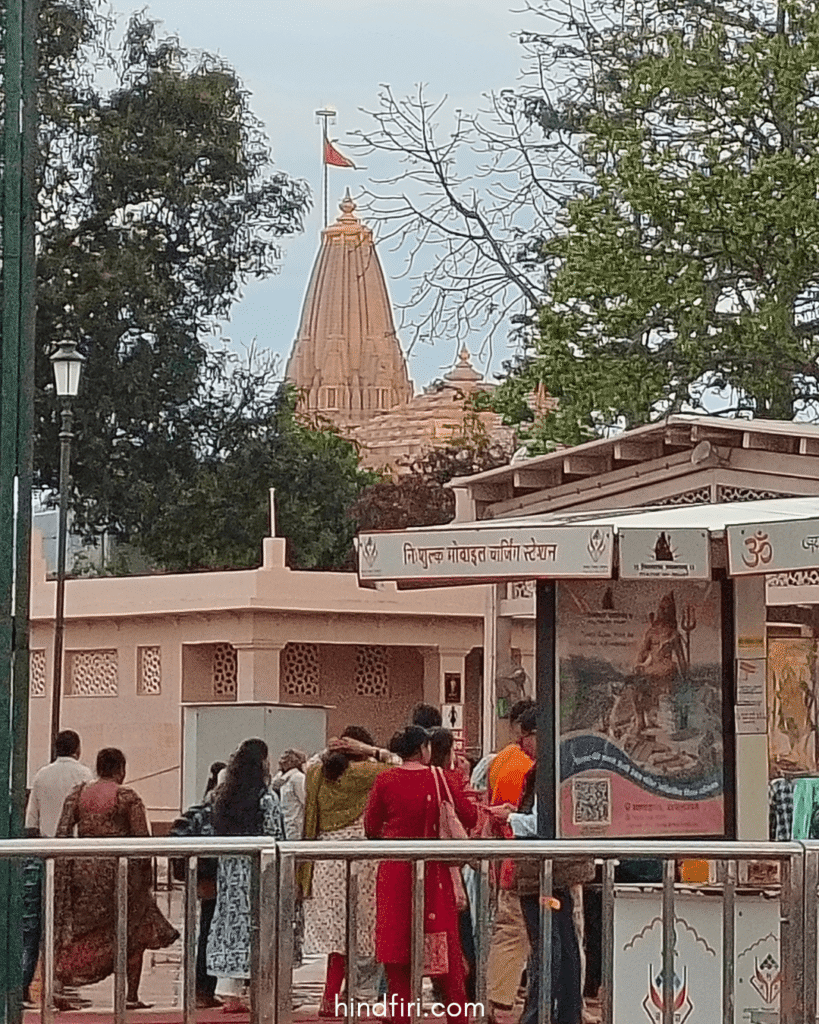
I don’t recall a separate VIP darshan queue. And the queues are meticulously organised, so I didn’t feel the need for a VIP line.
TIMINGS:- The temple is open daily from 7 a.m. to noon (12 p.m.) and reopens from 1 p.m. to 9 p.m.
TRAVEL TIP: Once you arrive in the temple’s mandap area, join the last queue on the right side. This line will bring you right in front of the idol.
HANUMAN GARHI MANDIR
The next place on the list of 6 must-visit places in Ayodhya is the Hanuman Garhi Mandir.
The Ram Mandir is a short distance from the Hanuman Garhi temple, but I wouldn’t recommend walking, because you’ll be doing that plenty from now on.
If you’ve hired an autorickshaw, they’ll drop you off at a corner near a sweet shop. From there you’ll have to walk a short distance to the temple.
According to stories, after Lord Ram returned from his 14-year exile, he ordered Hanuman to rest at Hanuman Garhi and watch over the people. Lord Ram said that Hanuman’s temple would be higher than his own, and people would pray at Hanuman Garhi before visiting Ram Mandir. Therefore, many people stop here first and then go to Ram Mandir.
I, however, would recommend visiting the Ram Mandir first, because darshan takes longer as the day progresses.
Another interesting fact is that the idol is of a young Hanuman sitting on his mother Anjani’s lap.
Unlike Ram Mandir, there are no organised queues here. You just join the crowd and hope you don’t fall down and get trampled. The unruly crowd aside, the temple is colourful and stunning. I would have loved to stop and marvel at the temple’s beauty, but it was too crowded to stand still.
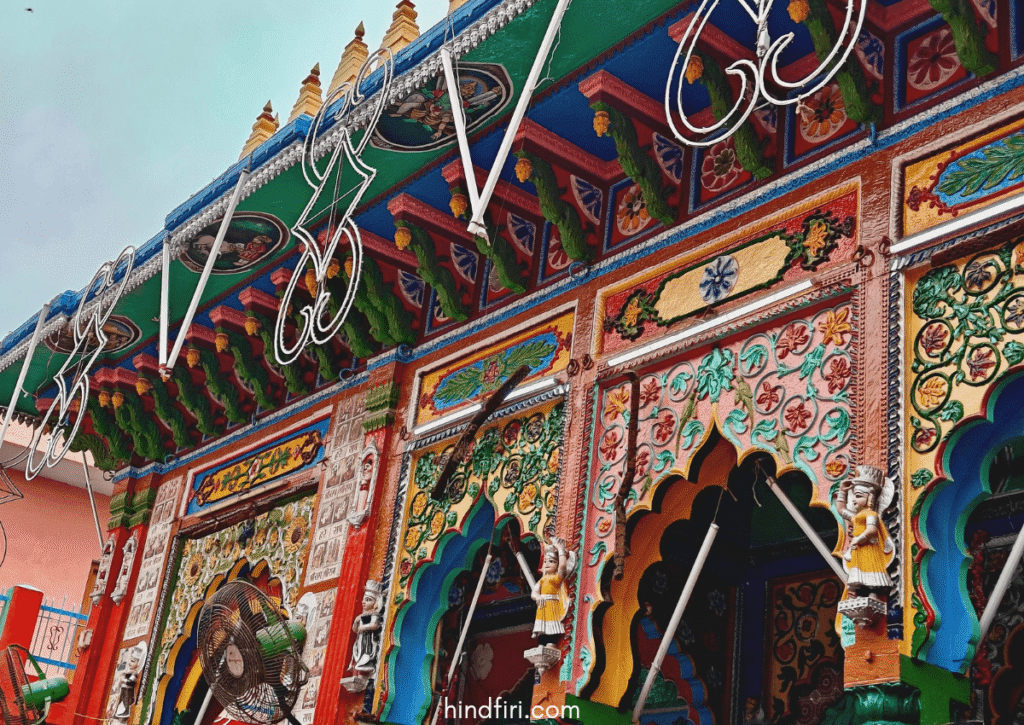
Also, unlike Ram Mandir, there are no lockers for shoes and personal items. You can leave your shoes at one of the stalls if you purchase from them. Otherwise, you’ll have to find a corner and hope that they’re still there when you return and not kicked onto the road.
TIMINGS:- The Hanuman Garhi Mandir is open daily from 4 a.m. to noon (12 p.m.) and reopens from 3 p.m. to 10:30 p.m.
DASHARATH MAHAL
Next on the list of places to visit in Ayodhya is the Dasharath Mahal. The name is self-explanatory. For those who are unaware, King Dasharath was Lord Ram’s father and ruler of Ayodhya. He lived here with his queens. It is also known as the Bada Sthan.
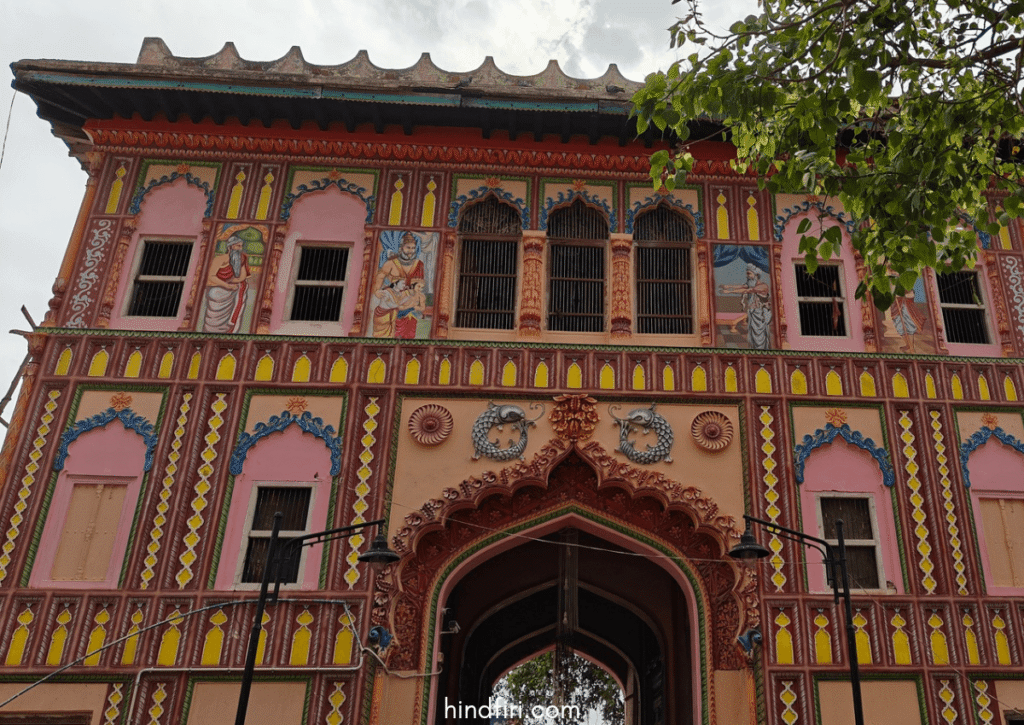
According to tales, the mahal was built by King Dasharath during the Treta Yug. Of course, the current palace is not the original structure. It has undergone numerous renovations over time.
Dasharath Mahal is a short 5 min walk from Hanuman Garhi Mandir.
Today, Dasharath Mahal serves as a temple where the idols of Lord Ram, Sita, Laxman, Shatrugan, and Bharat are worshipped.
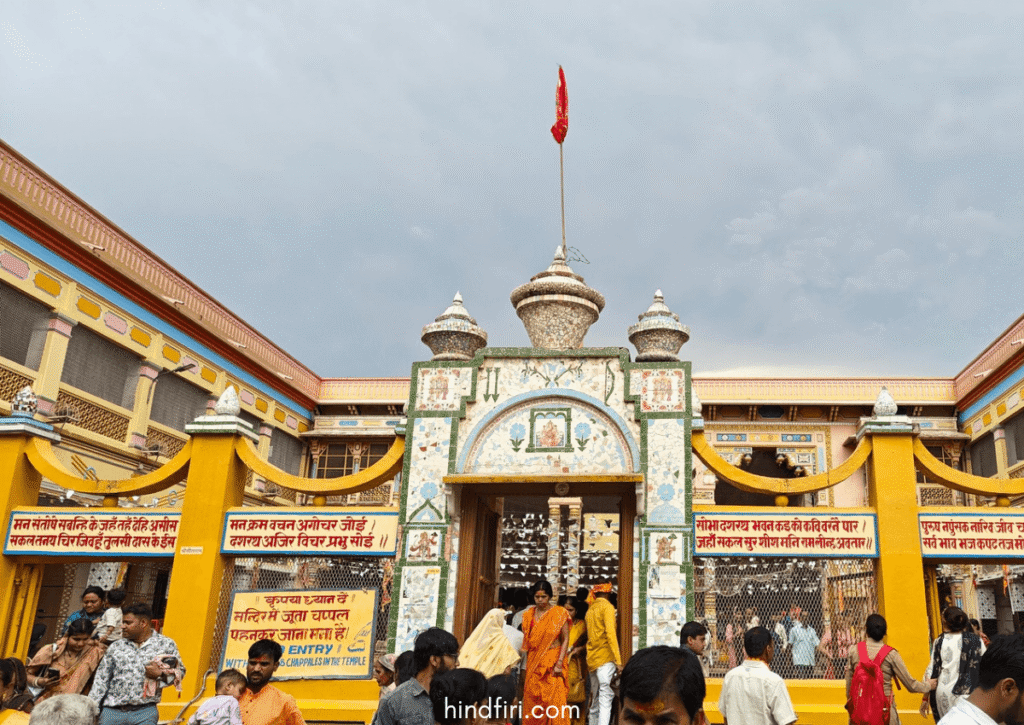
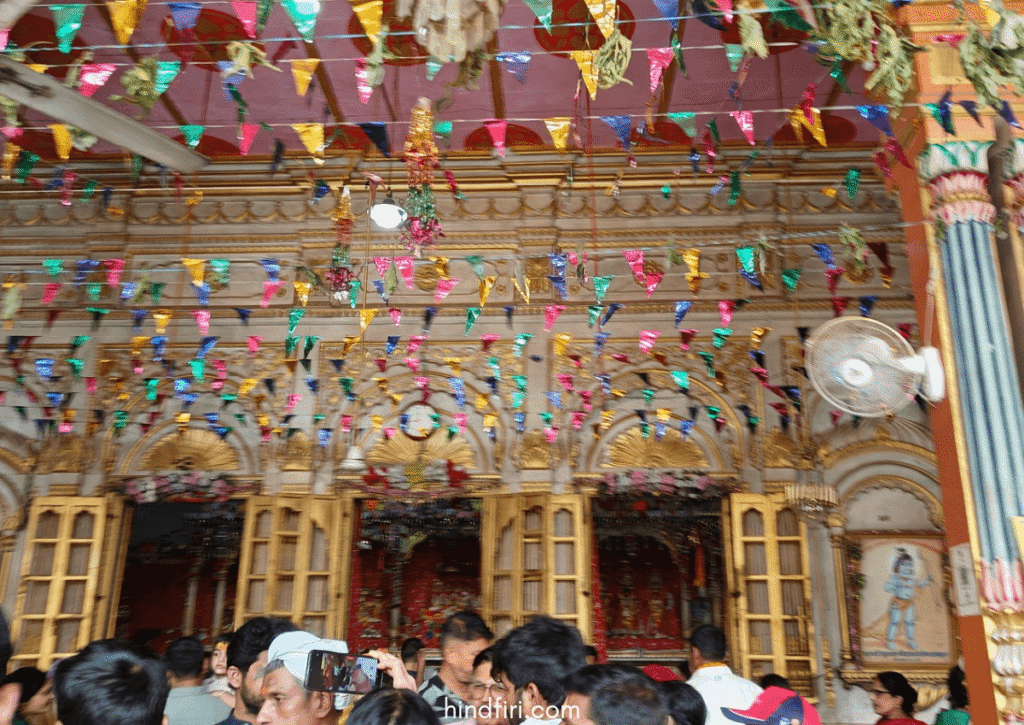
The entrance to the temple is marked by a large, imposing, colourful gateway. The Awadhi architectural style is a great photo op spot. Walk past the open ground to the temple. Inside, you’ll see people praying, meditating, or a group of transgender people dancing and singing hymns.
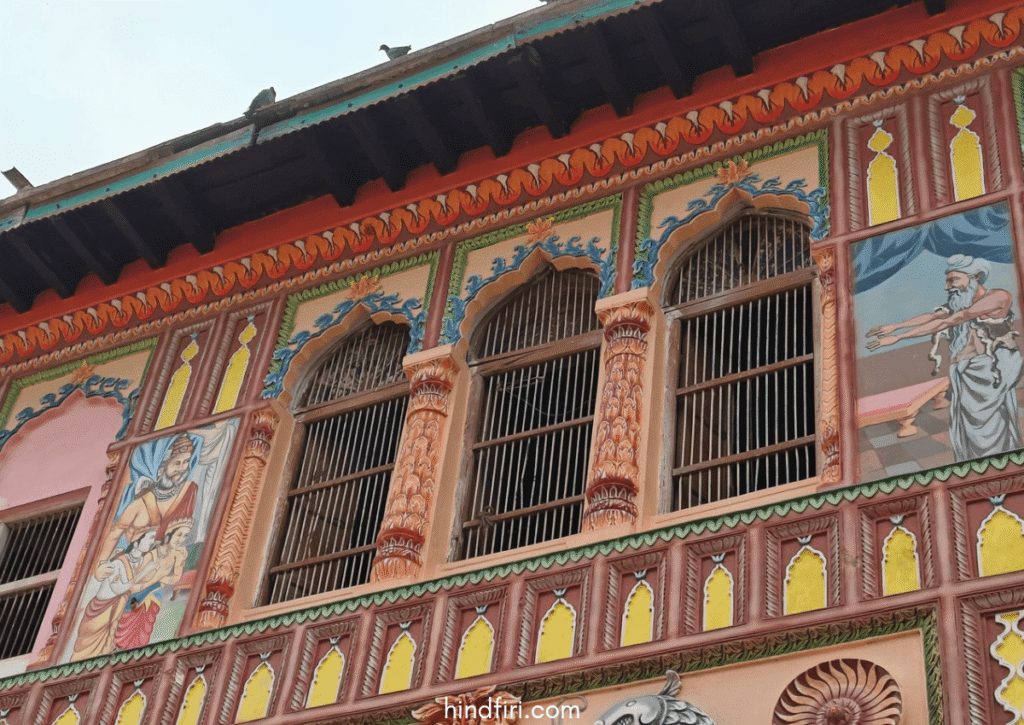
Did you know that when Ram set out for his exile, people followed him. He asked that men and women return home. But the transgenders thought the order didn’t include them, so they waited 14 years on the banks of the Tamsa River for Ram’s return.
Since then, the transgender community has played a significant role during festivals and celebrations in Ayodhya.
Therefore, you’ll see people seeking their blessings.
TRAVEL TIP: While there are no strict dress codes for visiting, I recommend avoiding short dresses, shorts or sleeveless tops.
TIMINGS:- The Dasharath Mahal is open daily from 8 a.m. to noon (12 p.m.) and reopens from 4 p.m. to 10 p.m.
KANAK BHAVAN
A short 2-minute walk from Dasharath Mahal is Kanak Bhavan, your next pit stop. It is also known as the “Golden Palace” because, according to stories, Kaikeyi gifted this palace to Lord Ram and Sita after their marriage. The original structure was covered in gold, hence the name.
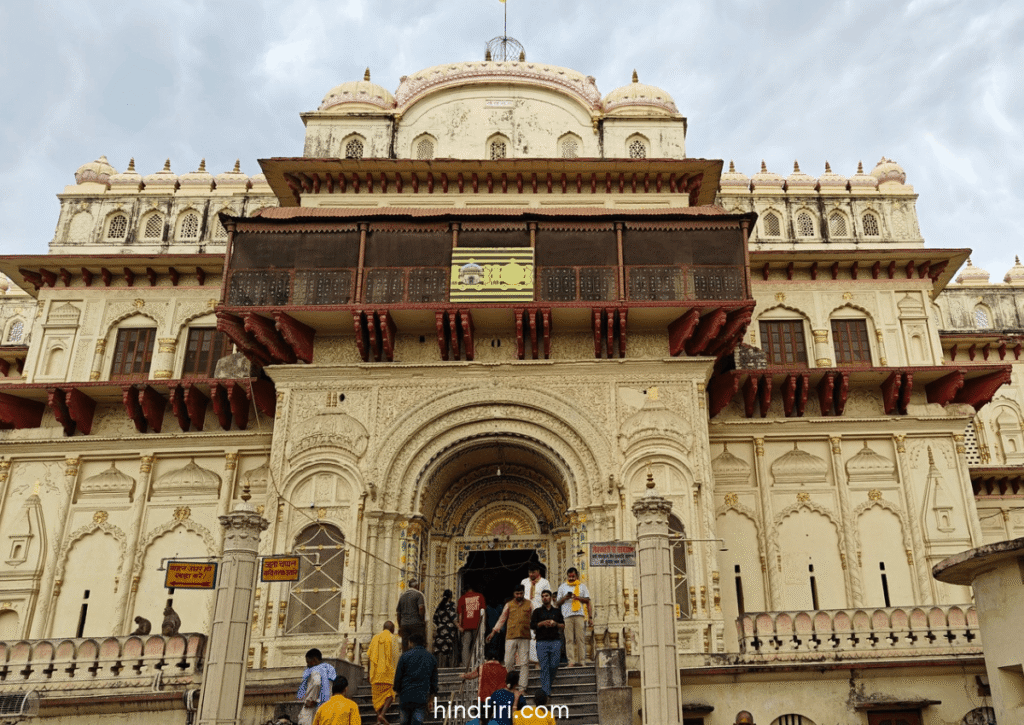
Of course, after years of reconstruction and renovation, the mahal has changed. Some believe that Krishna visited and rebuilt the palace in the Dvapar Yug. Later, King Vikram Adita renovated it during the medieval times. And Queen Vrishabhanu Kunwari built the current structure.
Lord Ram used Kanak Bhavan as his royal residence; therefore, it holds a significant religious and historical status in Ayodhya.
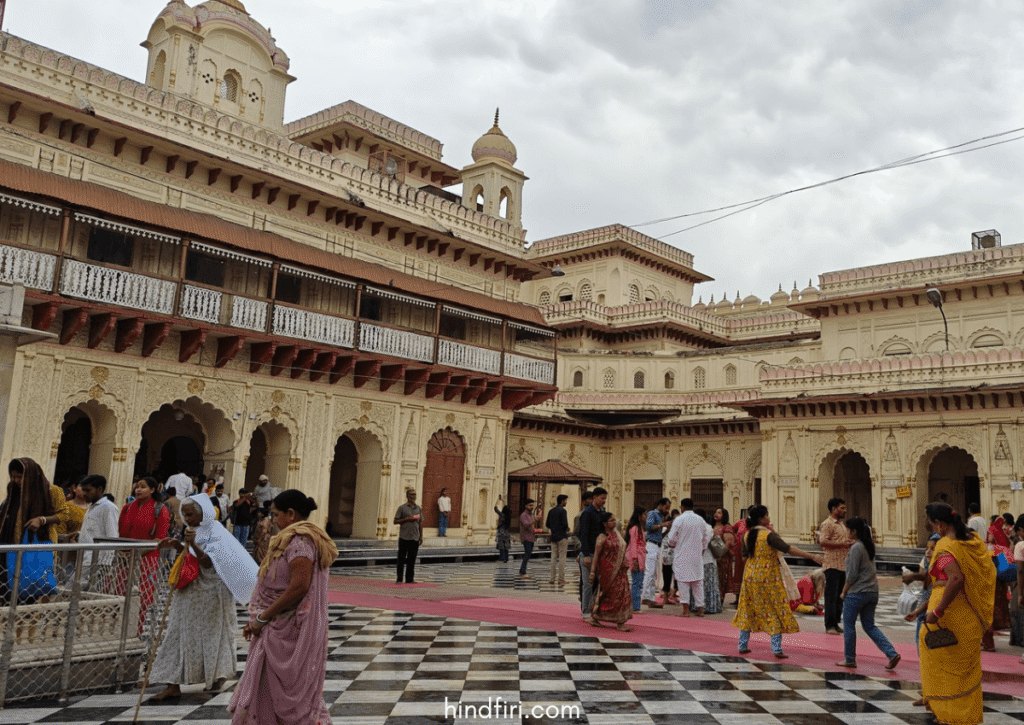
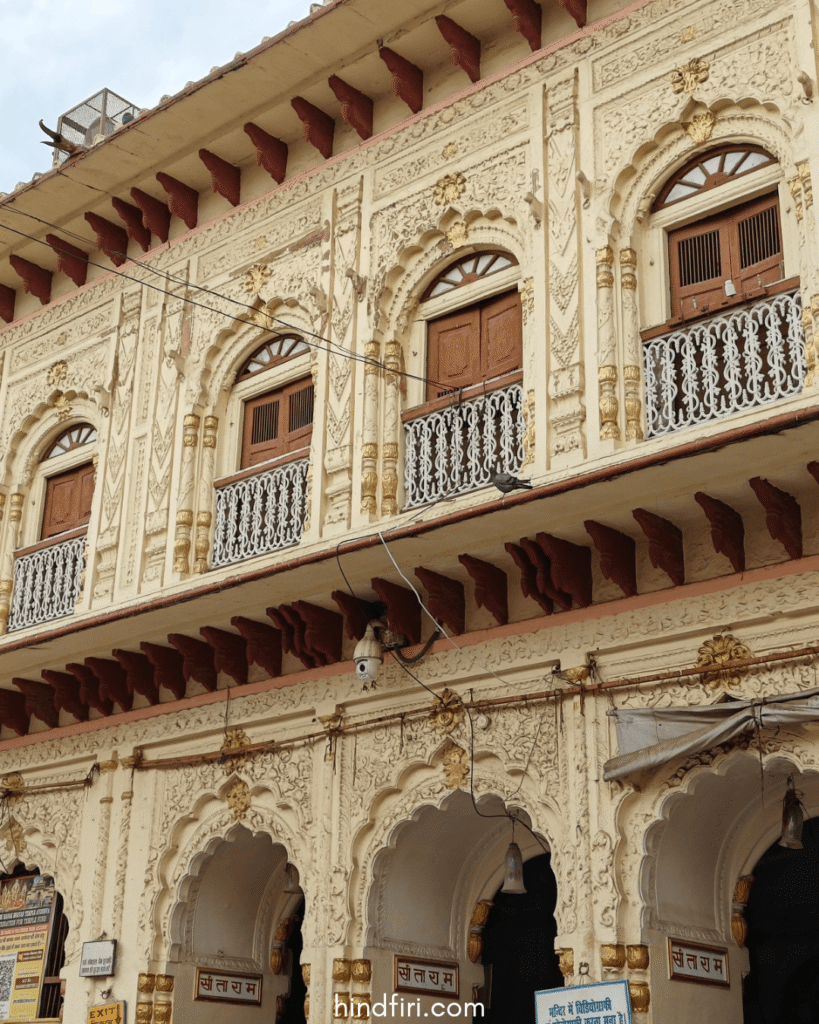
Kanak Mahal was one of my favourite places in Ayodhya, after Ram Mandir, of course. Unlike the other colourful temples you visited, Kanak Bhawan is painted in one colour, but the Bundela and northern India temple architectural style, with stunning carved arches, pillars, and windows, more than make up for it. The open courtyard, windows with jharokhas and arches, reminded me of my time in Jaipur palaces and at the Rajwada Palace in Indore.
Besides the gorgeous architecture, what blew my mind was that the temple there houses three statues of Lord Ram and Sita. Some believe that the biggest idols were established by Queen Vrishabhanu, and Vikram Aditya brought a second, slightly smaller idol. Whereas the smallest of them all was established by Lord Krishna himself. Whether that’s true or not, I don’t know, but it would be mind-blowing if it is.
TIMINGS:- The Kanak Bhavan is open daily from 9 a.m. to 12:30 p.m. and reopens from 4 to 9:15 p.m.
RAM KI PAIDI
On the banks of the Saryu River, there is a chain of ghats known as the Ram ki Paidi. It is a short drive from the Hanuman Garhi Mandir drop-off point.
The stories narrate that Lord Ram used to take a dip in the Saryu River after rituals and distribute alms to the Brahmins. It is also believed that Ram took a dip here before his 14-year exile. Paidi means stairs. Since Ram walked down this path, it is known as Ram ki Paidi.
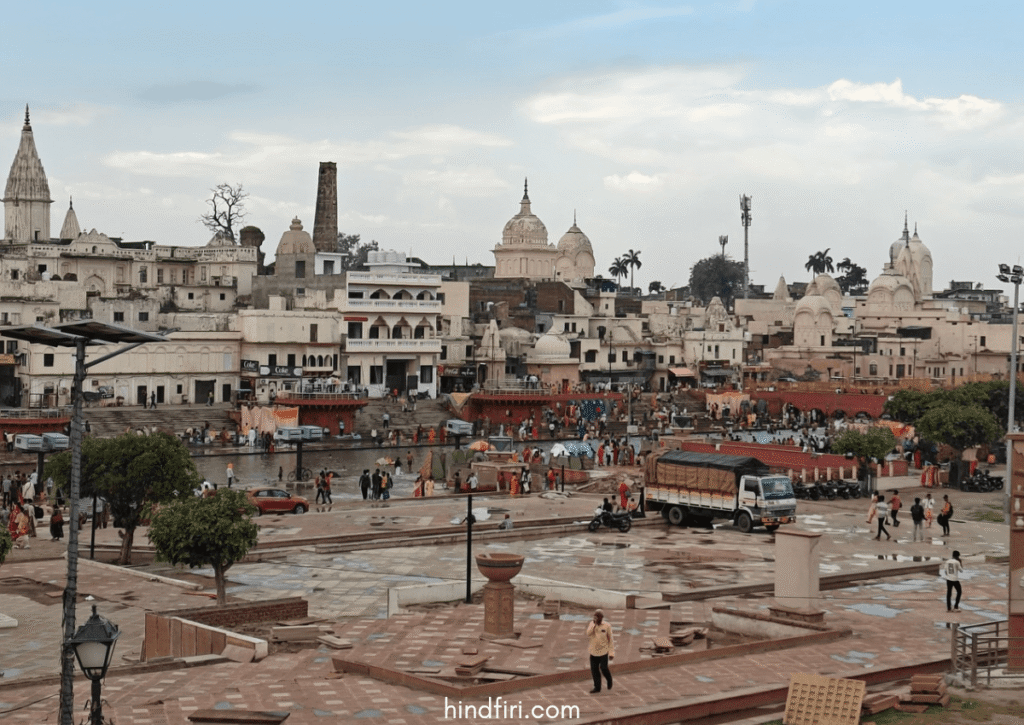
Therefore, you’ll see many devotees taking a bath in the river. Many people also come here before visiting the Ram Mandir.
Ram ki Paidi is beautiful and a must-visit place in Ayodhya. I visited here in the afternoon, and the heat was unbearable, but the cool river water was a blessing.
I would have loved to stay longer, but the early morning start was catching up to me.
If you’re ever in Ayodhya during Diwali, you’ll see Ram ki Paidi covered in thousands of diyas. I can only imagine what that would look like. Even if you aren’t there during Diwali, you can enjoy the light and sound show. This one-hour show depicts stories from Ramamyan.
TIMINGS:- Unlike all the other sites in Ayodhya, Ram ki Paidi is open 24 hours.
TRAVEL TIP: Ram ki Paidi is a short walk from Lata Mangeshkar Chowk, home to a Veena statue. It is a popular photo stop.
SARYU RIVER AND GHATS
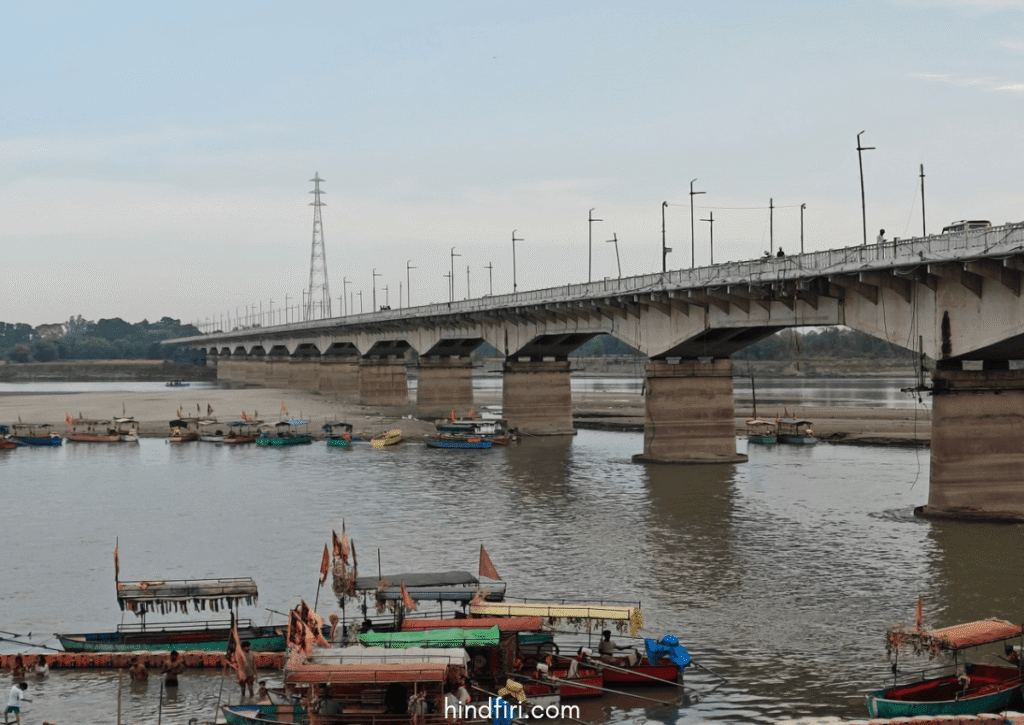
Just a few metres from Ram ki Paidi, flows the Saryu River.
The river banks are bustling with people performing pujas, taking dips, children swimming, and boats docked waiting to take passengers on a ride down the Saryu River.
It is a beautiful sight.
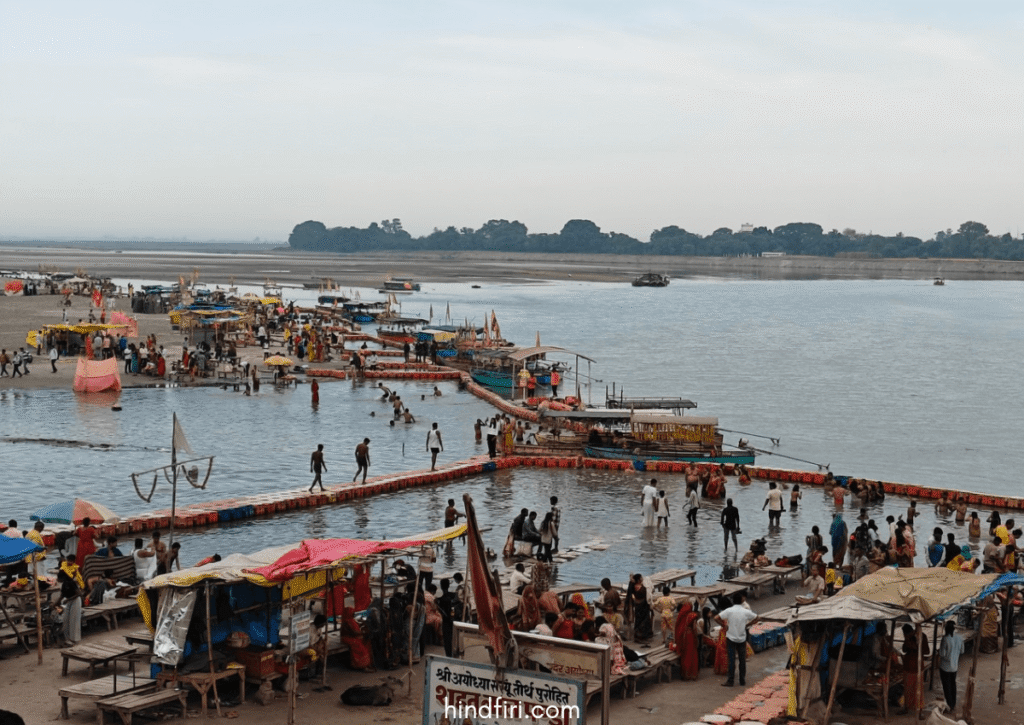
If you want to take a dip in the river, I would recommend doing so at Ram ki Paidi. A kund-like area has been set up, and a stream of the Saryu River is diverted to flow here. This is cleaner than down in the river.
I would, however, recommend taking a boat ride to see all the ghats lining the riverbank.
TRAVEL TIP:- Girls, there are changing rooms at the ghats, so go take a dip and enjoy yourselves without overthinking.
Also, don’t forget to catch the evening aarti here. From March to October, the aarti starts at 7 p.m., and from November to February, it starts at 6 p.m.
CONCLUSION
This concludes the blog post “6 must-visit places in Ayodhya”.
Ayodhya is historically and religiously significant. Therefore, there are many temples and small shrines, but there are 6 must-visit places in Ayodhya. They are-
- Shri Ram Janmabhumi Mandir
- Hanuman Garhi Mandir
- Dasharath Mahal
- Kanak Bhavan
- Ram ki Paidi
- Saryu River and Ghat
Travelling to Ayodhya soon? I’ve got the perfect 1-day Ayodhya itinerary and Ayodhya travel guide for you.
I hope this blog post was helpful. If you have any queries or suggestions, let me know in the comments.
Also, I hope this ignites your wanderlust because
Adventure is worthwhile in itself.
amelia earhart